Homemade Gluten Free Flour Blend

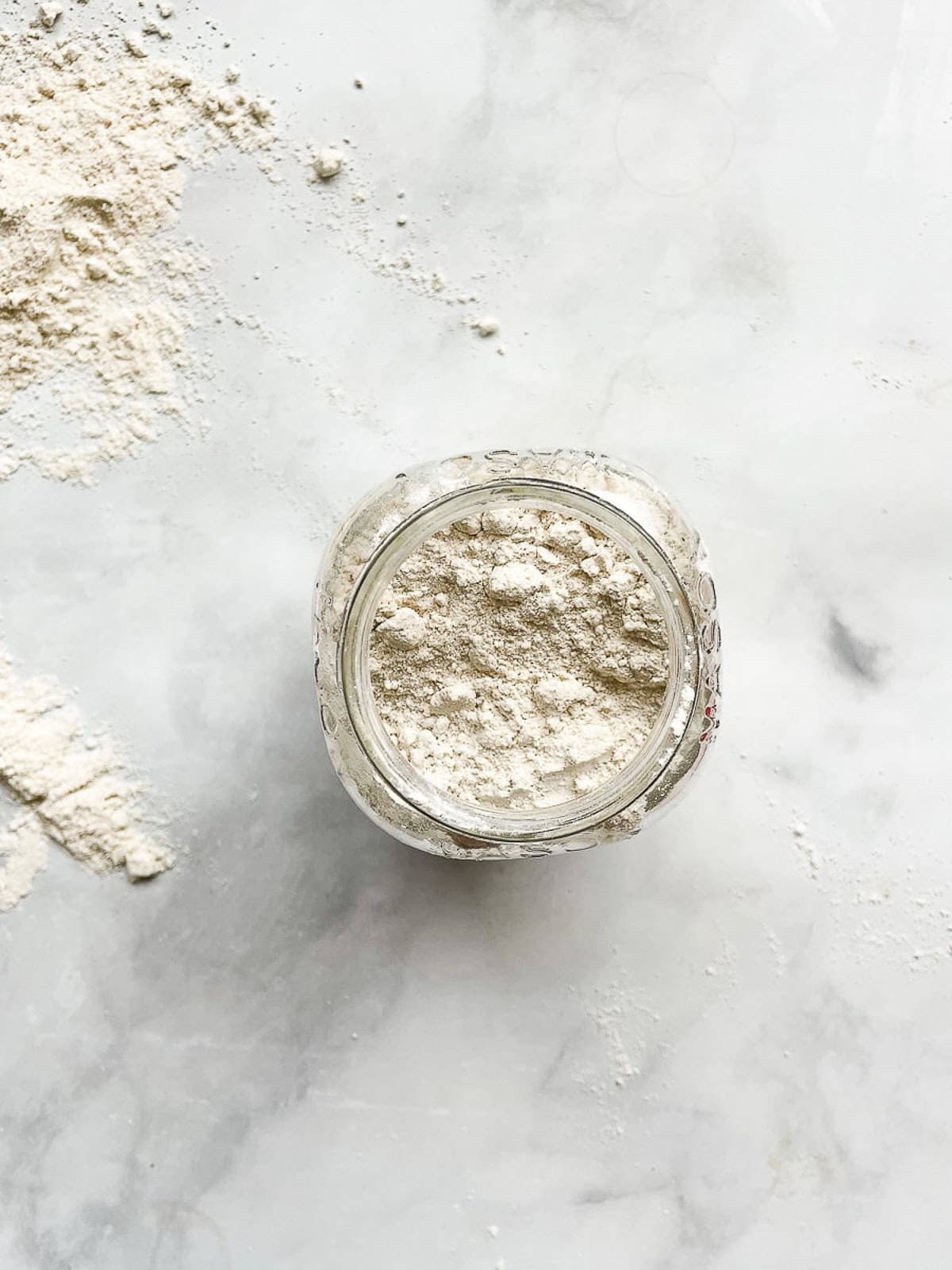
This easy, 3-ingredient homemade gluten free flour blend can be used instead of all-purpose flour in recipes and is so much better than store-bought gf flour! Use this gum-free blend in cakes, cookies, quick breads, pastries, and more.
Best Homemade Gluten Free Flour Blend
I love using gluten free flours in my recipes, and it is fun to experiment with their different flavor profiles when adding them to a recipe. However, sometimes I just don't have the time to weigh out a bunch of different flour! So, I developed this homemade gluten free flour blend for those times when I'm in a rush or just want to take out one jar from the pantry! It's made up of three reliable and, in my opinion, stellar gluten free flours: oat, sweet white rice, and tapioca. The flours work off of each other to create smooth batters and doughs that bake up light, fluffy, and almost indistinguishable from regular baked goods. Plus, no gums are needed! Let's get to it!
Jump to:
- Best Homemade Gluten Free Flour Blend
- This Homemade Gluten Free Flour Blend is So Versatile!
- Ingredients Needed to Make My Homemade Gluten Free Flour Blend
- Why I Chose These Gluten Free Flours
- Are Ratios Important When Making a Homemade Gluten Free Flour Blend?
- How Do You Make Your Own Homemade Gluten Free Flour Blend?
- Some Substitution Options
- What to Make with This Homemade Gluten Free Flour Blend
- Can I Do a 1:1 Swap for Flour?
- How to Store Homemade Gluten Free Flour Blend
- Homemade Gluten Free Flour Blend
This Homemade Gluten Free Flour Blend is So Versatile!
Not only is this blend super easy to whisk up, but you can also make a big batch and stash it in the pantry so it's always ready to go. I like it in brownies, cookies, cakes, for pie crusts, and popped into crisps. You can use it in place of gluten-free 1:1 flour in recipes, or try it in conventional recipes. Here's why I know you'll be a fan:
- Easy to make substitutions if needed. I've outlined some substitution suggestions lower down if you need to make ingredient swaps to suit your dietary needs or even just what you have in the cupboard.
- Reliable. Commercial mixes are good in that they are reliable, even if they sometimes contain ingredients that you can't eat or don't like. My mix is equally as reliable, and it's made up of simple ingredients that can be adapted if needed!
- Great texture. Forget gritty or dry bakes! This beautiful gluten free flour blend creates finished products with a wonderfully light and fluffy texture.
- Neutral flavor. This blend seamlessly incorporates into any baked good you can think of without the flavor of any one component overpowering the other ingredients.
Ingredients Needed to Make My Homemade Gluten Free Flour Blend
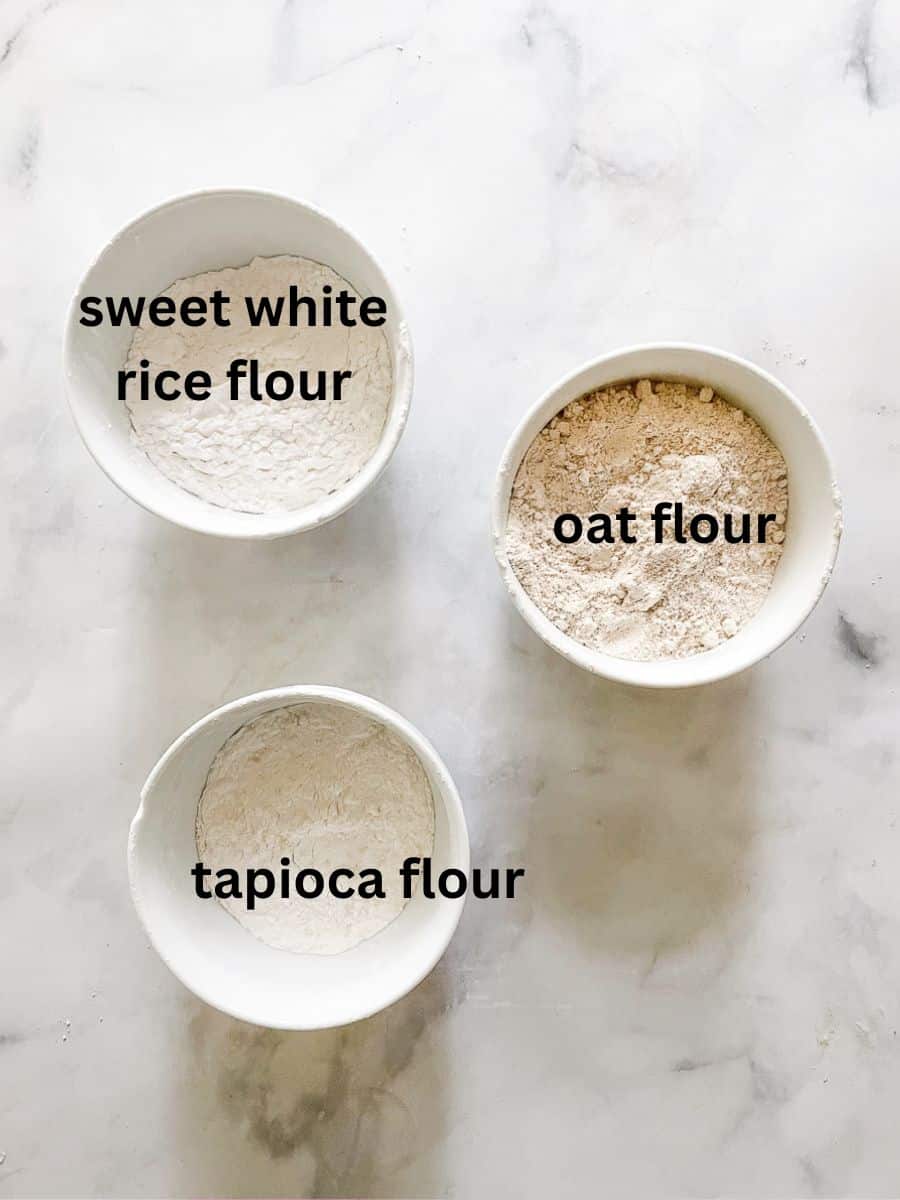
Just three ingredients are all you'll need for this blend! I prefer not to use xanthan gum in my recipes, but you can certainly add it to your gluten free batter when using this blend, although in my opinion the batters or doughs won't need it!
- Oat flour - Gluten free oat flour brings structure to the flour blend and is a versatile and economical gluten free flour.
- Sweet white rice flour - Also known as mochiko, sweet white rice flour is known for its sticky properties, which work amazingly well in baking gluten free.
- Tapioca flour - This starchy flour brings lightness and binding to the gluten free flour blend.
Why I Chose These Gluten Free Flours
You'll need just three gluten free flours to make this homemade gluten free flour blend: oat flour, tapioca flour (starch), and sweet white rice flour (also known as mochiko). Many of these flours are available at grocery stores, including Whole Foods, and always available online.
As noted, I love oat flour in gluten free baking. It brings a nutty, whole grain hint of sweetness to baked goods and, more importantly, can mimic wheat flour. Oat flour helps to create a fluffy crumb and moist texture which is especially great in gluten-free baking. If you have Celiac or are very sensitive to gluten, make sure to purchase certified gluten free oat flour or certified gluten free oats and make your own oat flour. If you can't eat oats, I've included some substitution suggestions lower down.
While oat flour can often be used interchangeably with wheat flour if you substitute it by weight, for this all purpose gluten free flour blend I wanted to create a blend that was closer to traditional all purpose flour. To accomplish this, I balanced it with tapioca flour to bring a bit of lightness and sweet white rice flour for binding and bounce. I love baking with these two more starchy flours because they help balance out the earthier, heartier oat flour and in combination create baked goods that are almost indistinguishable from regular baked goods.
Are Ratios Important When Making a Homemade Gluten Free Flour Blend?
Yes, ratios are so important! Figuring out the correct ratio of flours took a little trial and error, but I believe I've landed on the correct amounts of flours in proportion to each other to make up this blend. I didn't want the flour mix to be too heavy nor did I want it to be gritty or produce dry results. To truly mimic the properties of wheat flour it's best to use a combination of flours - and this one is a winner. If you can, weigh your flours before whisking up the blend. If you don't have a scale, I've also included cup measurements for each flour.
How Do You Make Your Own Homemade Gluten Free Flour Blend?
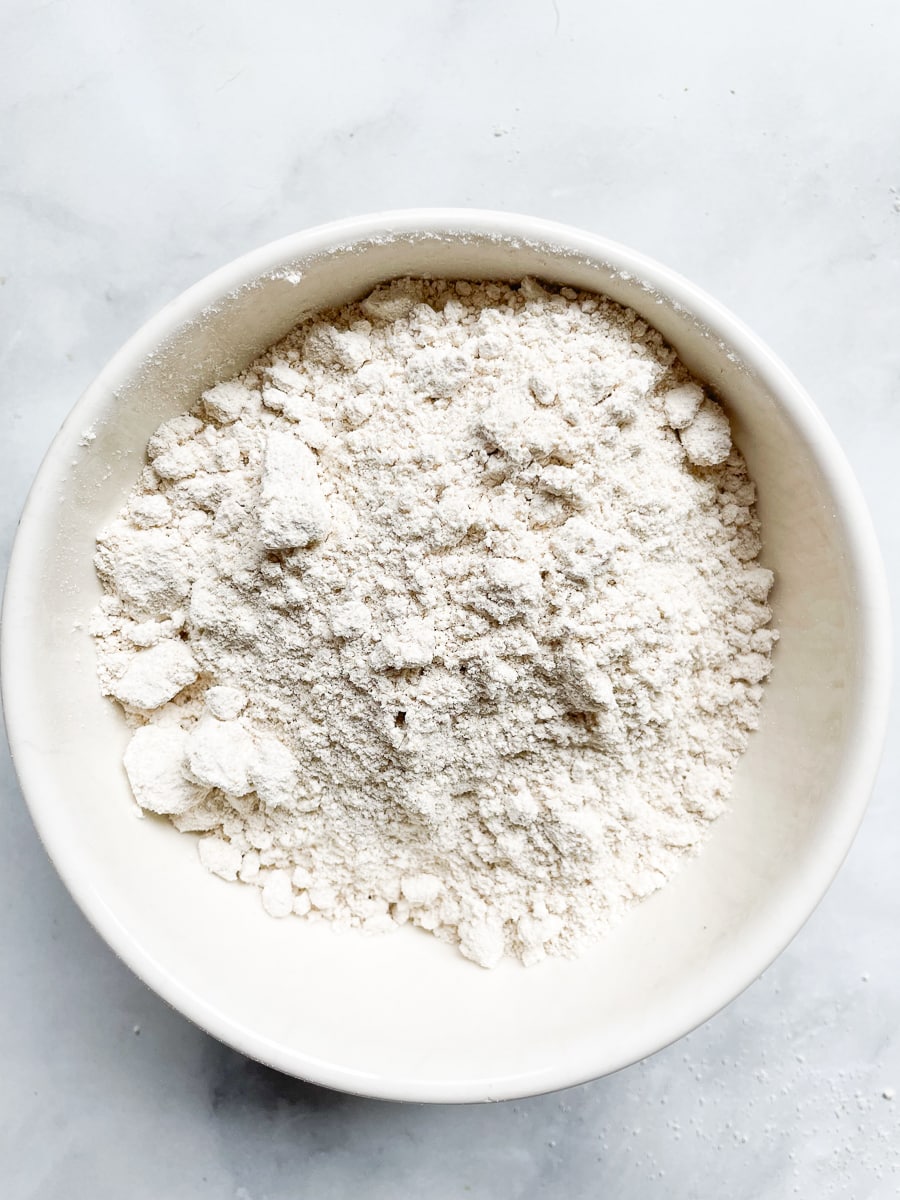
Just whisk and you're done! Seriously, that's all you need to do to create this flour blend. Make sure to give it a shake or a whisk each before you use it in a recipe to make sure the flour is well blended.
Some Substitution Options
If you can make this blend as written, great! If you need to change it up a bit, I've included some options below:
- Oat Flour: If you can eat oats, please use it in this blend! Oat flour is so lovely, light, and buttery and works so well in baking. But, if you can't eat oats, brown rice, sorghum, or millet flour are good substitution options.
- Sweet White Rice Flour: Sweet white rice flour is a unique gluten free flour because it has wonderful binding properties without being gritty. I don't know if there is a direct substitute, however, you could try white rice flour in place of the sweet white rice flour if needed.
- Tapioca Flour: You can use arrowroot or potato starch for the tapioca flour.
What to Make with This Homemade Gluten Free Flour Blend
You can use this mix in most of the recipes on my website - in my section on classic baking recipes that use wheat flour, swap 1 ¼ cups of the blend for every cup of all-purpose or whole wheat flour called for in the ingredients.
For my gluten free recipes, you can total the number of cups of gluten flour or flours and replace them with this gluten free flour blend. Always measure by weight for the best results. Note that 1 cup of this blend = 120 grams.
Can I Do a 1:1 Swap for Flour?
Yes, you can substitute this flour blend 1:1 with all-purpose flour. Use this flour in a 1:1 substitute by weight in recipes that use all-purpose flour (to keep it easy, choose recipes that give weight AND cup measurements). If you don't have a scale, substitute 1 ¼ cups of flour blend per 1 cup of all-purpose flour for the best results.
How to Store Homemade Gluten Free Flour Blend
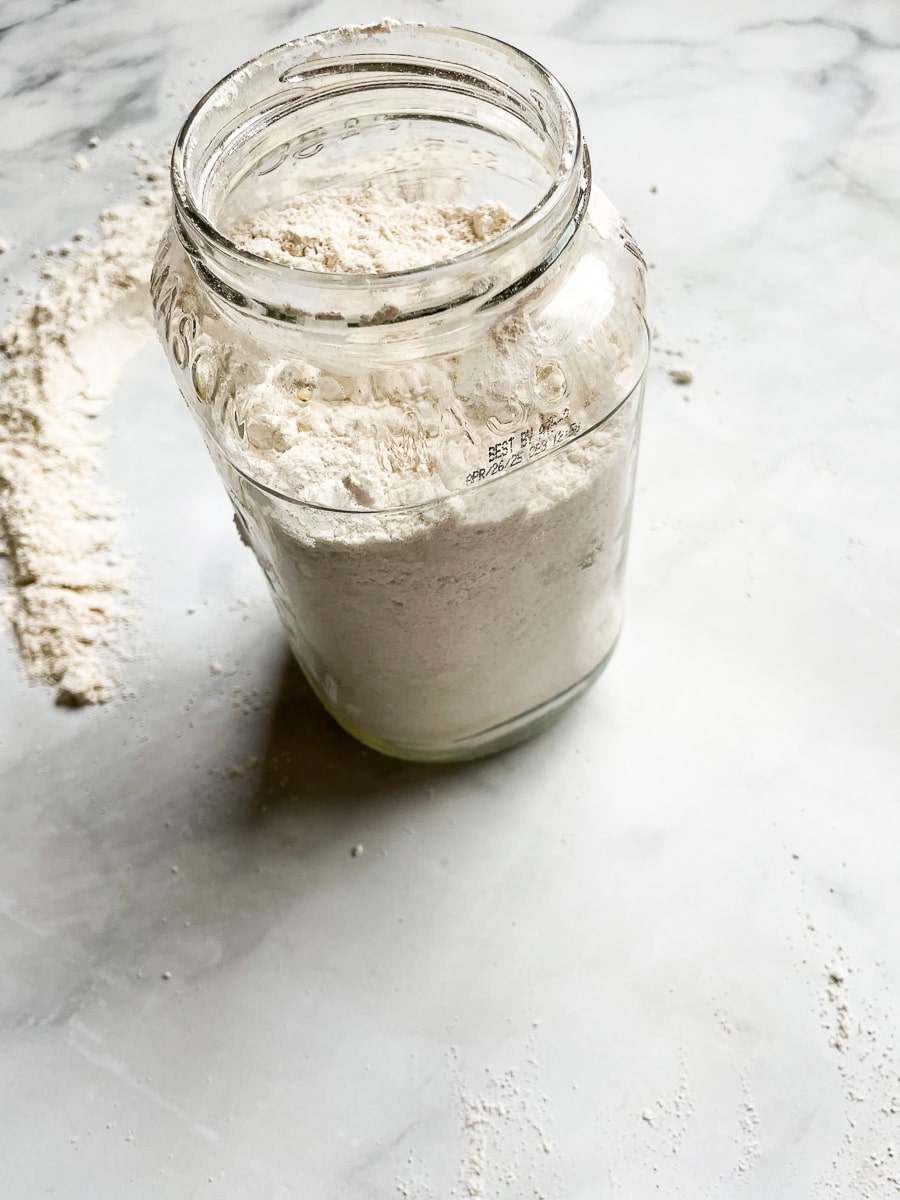
Store your homemade gluten free flour blend in a jar with a tight-fitting like - I like to use a large Mason jar - or in a sealable bag in a cool, dark place (your pantry is perfect) for up to 2 months. Give the flour mix a shake each time you use it to re-blend the flour a bit.
Happy baking! If you make this homemade gluten free flour blend, let me know! Please leave a comment below or reach out with any questions. I hope you loved it! ❤️
Homemade Gluten Free Flour Blend
Ingredients
- 3 cups certified gluten free oat flour (substitute brown rice flour if you don't eat oats)
- ½ cup sweet white rice flour (also called mochiko)
- ½ cup tapioca flour
Instructions
- Place all of the ingredients in a bowl and whisk until well combined. Store the flour mix in a glass jar with a tight-fitting lid or a sealable plastic bag and keep it in the pantry.


Tried your gluten free soda bread recipe and love it! The only slight downside is it is very crumbly and breaks in the toaster, what am I doing wrong? Any tips? It will definitely become a staple in spite of that…
Hi - so glad to hear you loved it! How old is the bread when you toast it - right away or a few days? Are you hydrating the dough before baking? You could try slicing and freezing bread after the first day and then toasting slices straight from the freezer. You could also try baking it a tad less (try 10 mins less) so it doesn't overbake. Gluten-free bread can be tricky - you don't want to bake too short otherwise the inside is gummy, yet too long can dry it out!
I'm planning on trying this when I eventually get around to getting some sweet rice flour, but I have a question first! Would I be able to substitute the tapioca starch with cornstarch (or potato starch, if there's the off-chance that I have it for once) instead? And how much would I have to change the measurements, if at all?
Hi! You could substitute either cornstarch or potato starch for the tapioca. Just make sure to do it by weight (55 grams) so that the measure is the same.
Thank you! I'll probably try it later in the month once I've gotten over my cold & got some rice flour!
I cannot have brown rice flour which is in a lot of GF blends. This blend is absolute perfection! I just used it to make the best GF fudgy yet chewy brownies! I did add a tsp of xanthan gum to the brownies but don’t know that I really needed to.
I'm so glad this worked out for you! happy baking!
Hello Nicole,
Thank you for the wonderful recipes.
What can I use instead of tapioca? I can only use oat, rice, garbanzo, and nixtamalized corn flours. Can’t use any nut or seed flours either.
Thanks.
Hi Alex - Can you use cornstarch or arrowroot powder? I would try those first! If not, let me know and I will think of another option ... for nut flour subs, you could use tiger nut flour (not actually a nut!) or another gf flour like teff flour.
Hi Nicole,
Unfortunately not. I’m very limited to the flours I mentioned. No corn starch or arrow root.
Hi Alex, In that case you could try using sweet white rice flour for the tapioca (so it would be a mix of oat flour and sweet white rice flour). I have done this combo before and it works pretty well! Let me know if you give it a try.
Not clear on using this flour blend as 1:1 for AP wheat flour. Is it 1:1 substitution by weight or by cup?
It's best to do it by weight. You can substitute 1 1/4 cups of the blend per 1 cup of all purpose flour if you don't have a scale.
Would this make good southern biscuits or will it drastically change the color? Thanks!
Hi! Yes the color will change a bit due to the oat flour. You could try using regular white rice flour in place of the oat flour for a lighter color.
What can I use to replace the white rice flour? Brown rice or sorghum? Thank you
Hi - I would recommend a starchy flour like arrowroot or cornstarch for the sweet white rice flour.
Hello.
Would glutinous/sweet brown rice flour work in place of sweet rice flour or do you still recommend arrowroot be used instead?
Thank you,
Hiroshi
Hi Hiroshi, I have not used glutinous sweet brown rice flour, but if it is similar to sweet white rice flour in how it bakes/cooks, then it might be worth giving it a try here. If you do try it, I'd love to hear if it did or didn't work.
Thank you. I always use glutinous brown rice flour instead when making mochi and it consistently turns out great, so I'll give it a try. I'll let you know how it turns out and what flours I used as I'm nearly out of my GF AP flour blend.
I just made this flour and used it for banana muffins. I have to say, it is perfect. I have searched the world over for a simple diy gf flour and for me, this hits the mark.
Thank you
Thank you so much for sharing that, I am thrilled it worked for you!
I have an oat intolerant, what do I use in place of oat flour to make gluten free flour?
You can use brown rice, sorghum, or millet flour! White rice flour may also work.
This has been seeming to work so far in recipes using oat flour, glutinous brown rice, and tapioca starch. Thank you for the recipe. :)