Almond Flour Cornbread

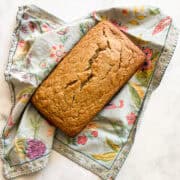
Easy (and gluten-free) almond flour cornbread is moist and lightly sweet. It's made with a combo of almond flour and cornmeal and is lovely with soups, stews, chili, and more.
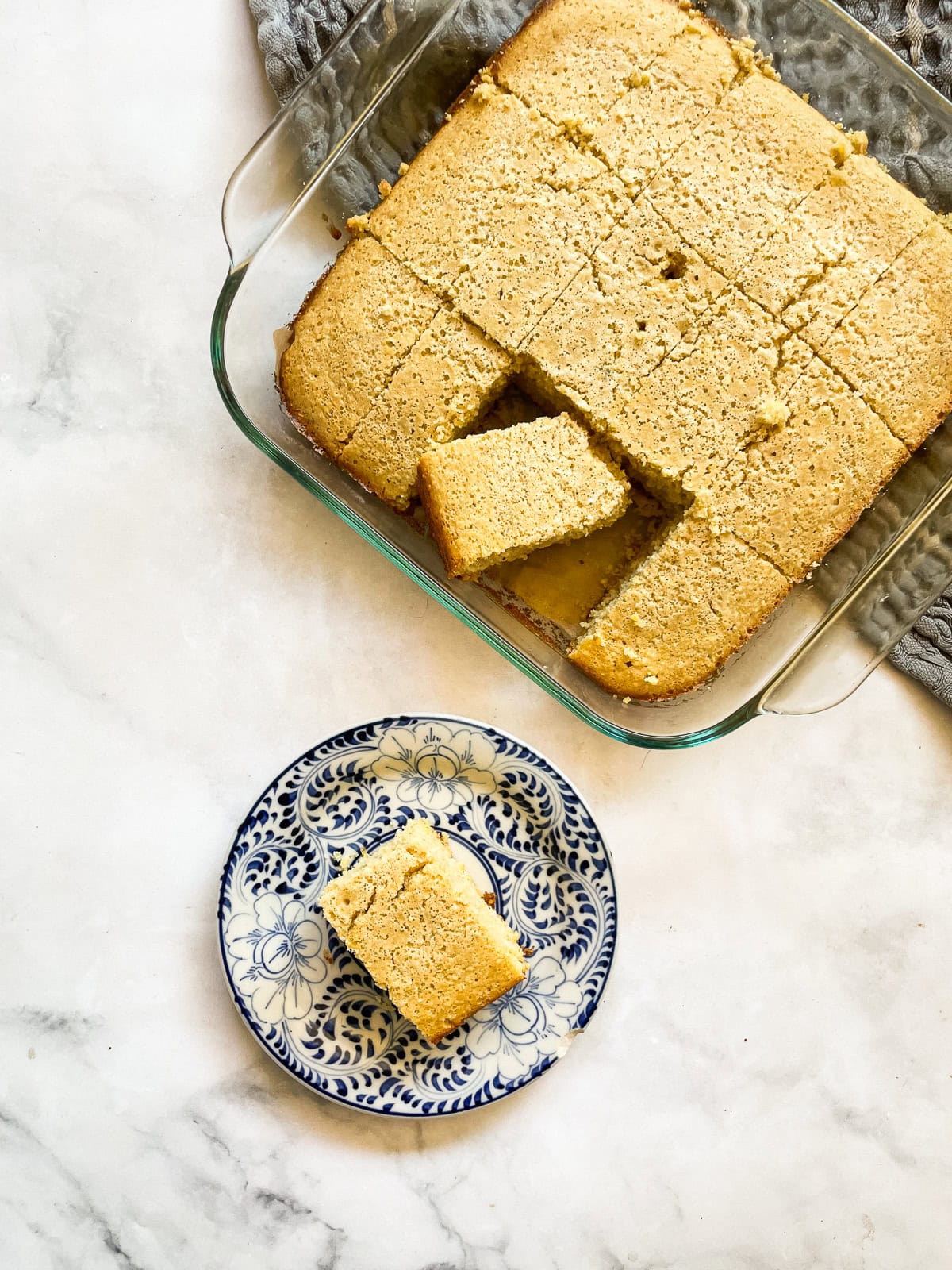
Make this delicious, naturally gluten-free almond flour cornbread the next time you whip up a pot of vegetarian white chili or marry me chickpeas! It's also wonderful with all kinds of soups, especially butternut squash soup or carrot cauliflower soup on the holiday table.
A bit of buttermilk adds moisture here, and you can swap the sugar for maple syrup, similar to my gluten free maple cornbread recipe. I love drizzling cornbread with gluten free gravy and often serve it as part of my gluten free Thanksgiving menu, but it's equally wonderful on a casual weeknight when you need a quick gluten-free side.
Jump to:
Why You Should Make This Almond Flour Cornbread
I have quite a few cornbread recipes on this site, ranging from gluten free pumpkin cornbread to gluten free honey cornbread muffins - all fantastic choices. I'd like to add another to the mix, and this easy recipe made with almond flour instead of all-purpose flour is just perfect. You can bake it in an 8x8-inch pan like I've shown here, in a cast-iron skillet, or as muffins.
- Tender and moist. Almond flour adds a bit of protein to this cornbread and creates a nice and tender crumb, while buttermilk adds moisture. This is NOT a dry and crumbly cornbread!
- Easy ingredients. You may have most of these ingredients in the pantry and fridge already, and if you don't have buttermilk, it's super easy to make a DIY substitute.
- Always gluten-free. All of the ingredients in this recipe are naturally gluten-free, making it a great choice for everyone gathered around the table.
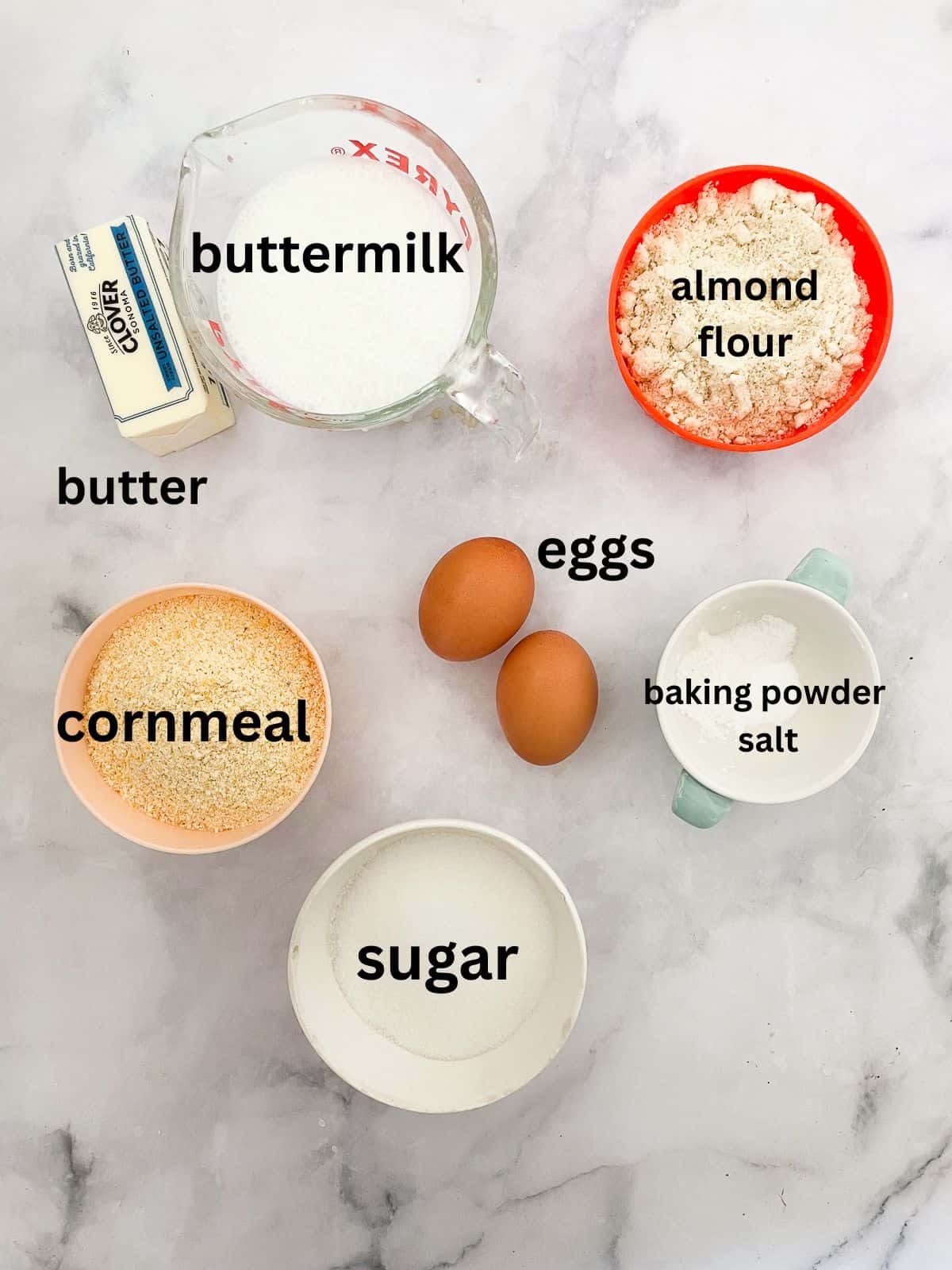
Ingredients Needed for Almond Flour Cornbread
Here's a quick look at what you'll need to bake this cornbread tonight! Make sure to scroll down to my recipe card at the bottom of this post for the full ingredient amounts and instructions.
- Egg - A large or extra-large egg is fine.
- Buttermilk - I like real buttermilk here, but you can use the milk/vinegar method if needed, or just use milk in a pinch.
- Butter - Unsalted or salted butter is fine.
- Granulated sugar - Or try light or dark brown sugar, or coconut sugar.
- Cornmeal - See my notes lower down on what type of cornmeal to use. I like fine-ground cornmeal.
- Almond flour - Finely ground almond flour blends seamlessly into the batter. If you can't eat almonds, try another nut flour of your choice or swap oat flour or brown rice flour.
- Rising agents - A combination of baking powder and baking soda.
- Salt - I use fine sea salt, and table salt is fine, too.
Almond Flour Cornbread Variations
- Honey - Use honey instead of sugar for a different flavor note.
- Maple syrup - Naturally sweeten your cornbread with cozy maple syrup.
- Dairy-free - Swap the buttermilk for non-dairy yogurt and the butter for non-dairy butter.
- Add corn - I love tossing in a 1 cup of fresh or frozen corn kernels for some crunch.

How to Make Almond Flour Cornbread
Here's an overview in photos of how to make gluten free almond flour cornbread:
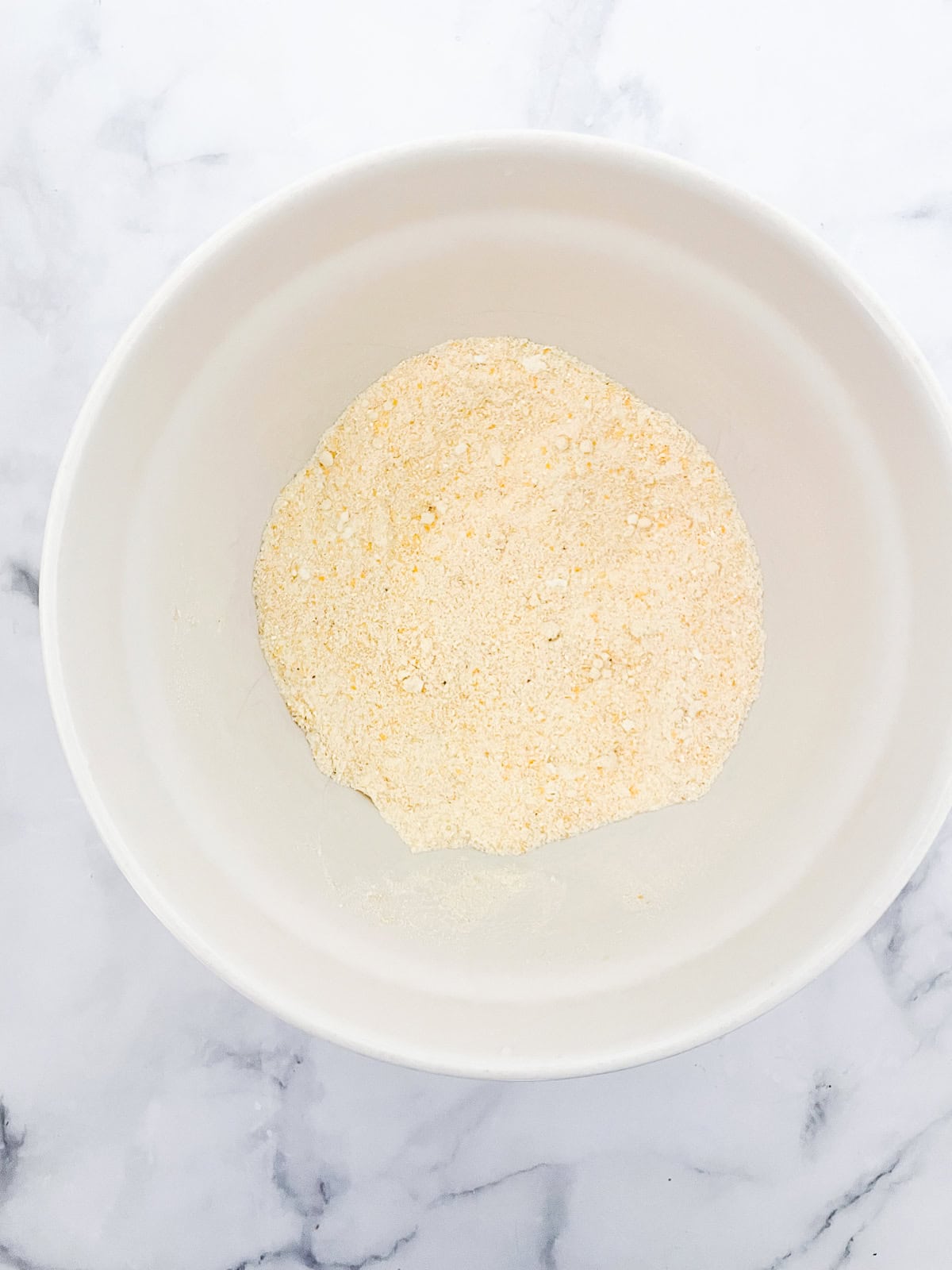
1. Make dry mix: In a bowl, combine the dry ingredients.
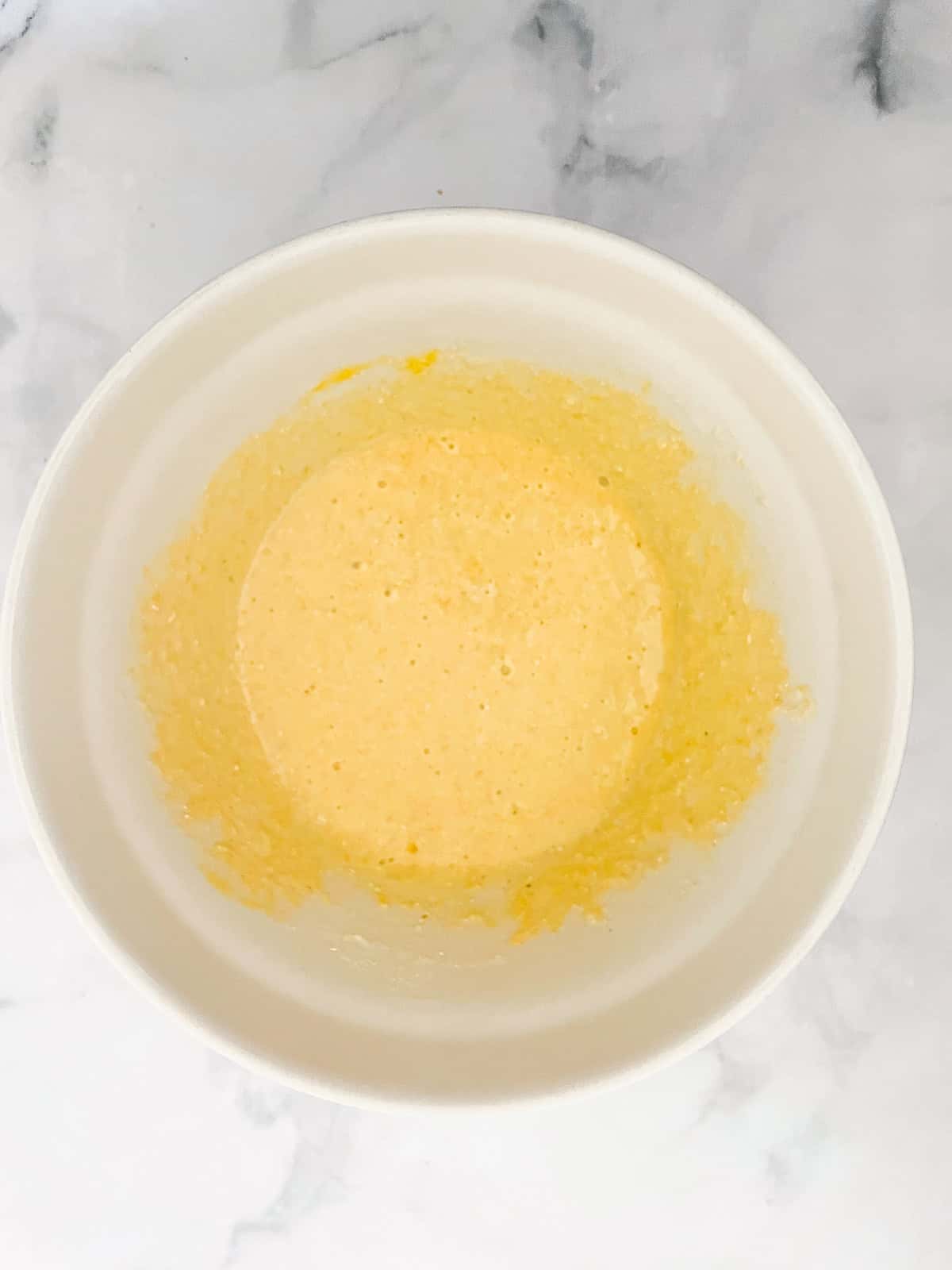
2. Mix wet ingredients: In another bowl, whisk together the wet ingredients.
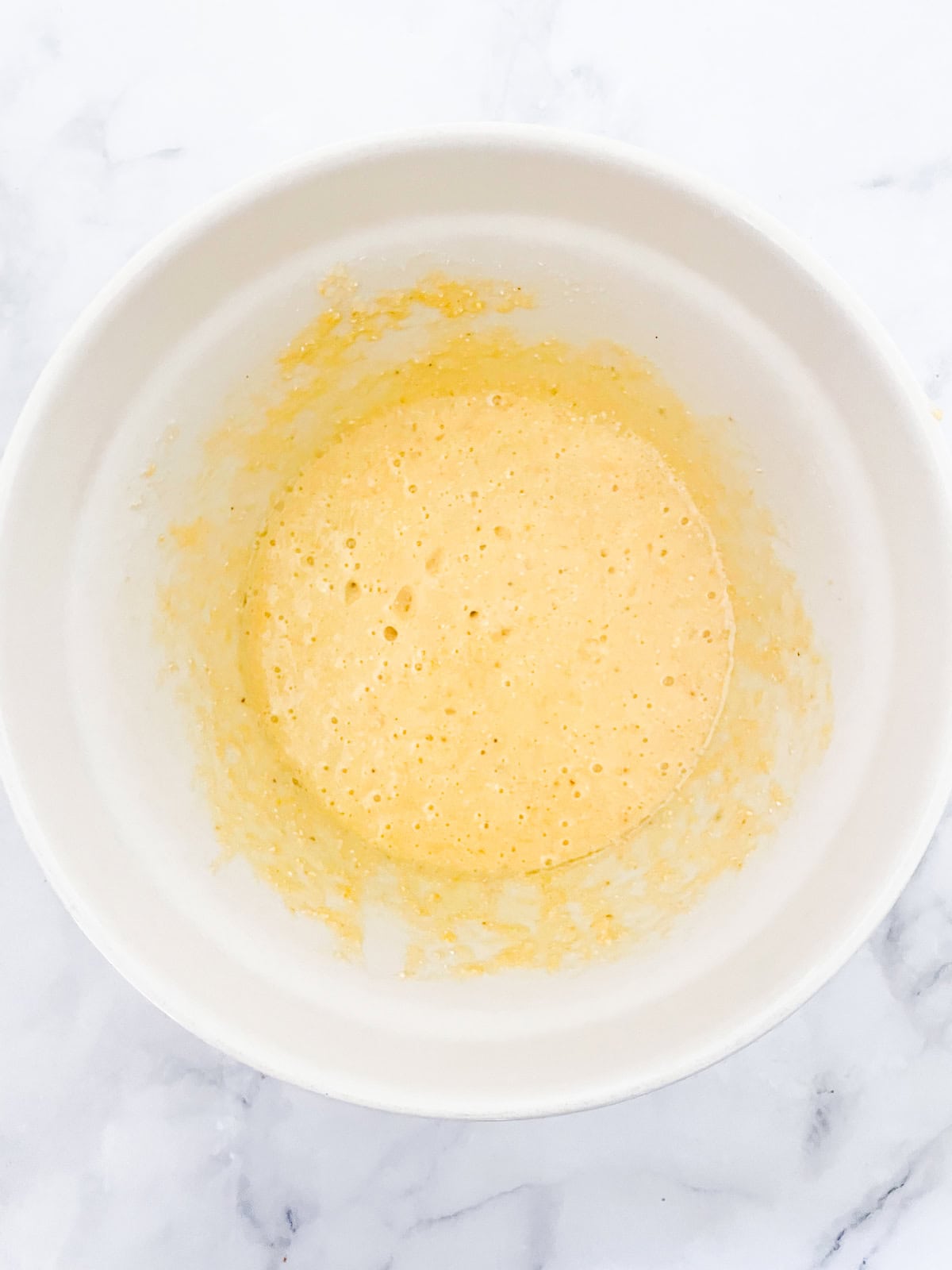
3. Combine: Pour the dry mix into the wet ingredients and fold them together to combine.
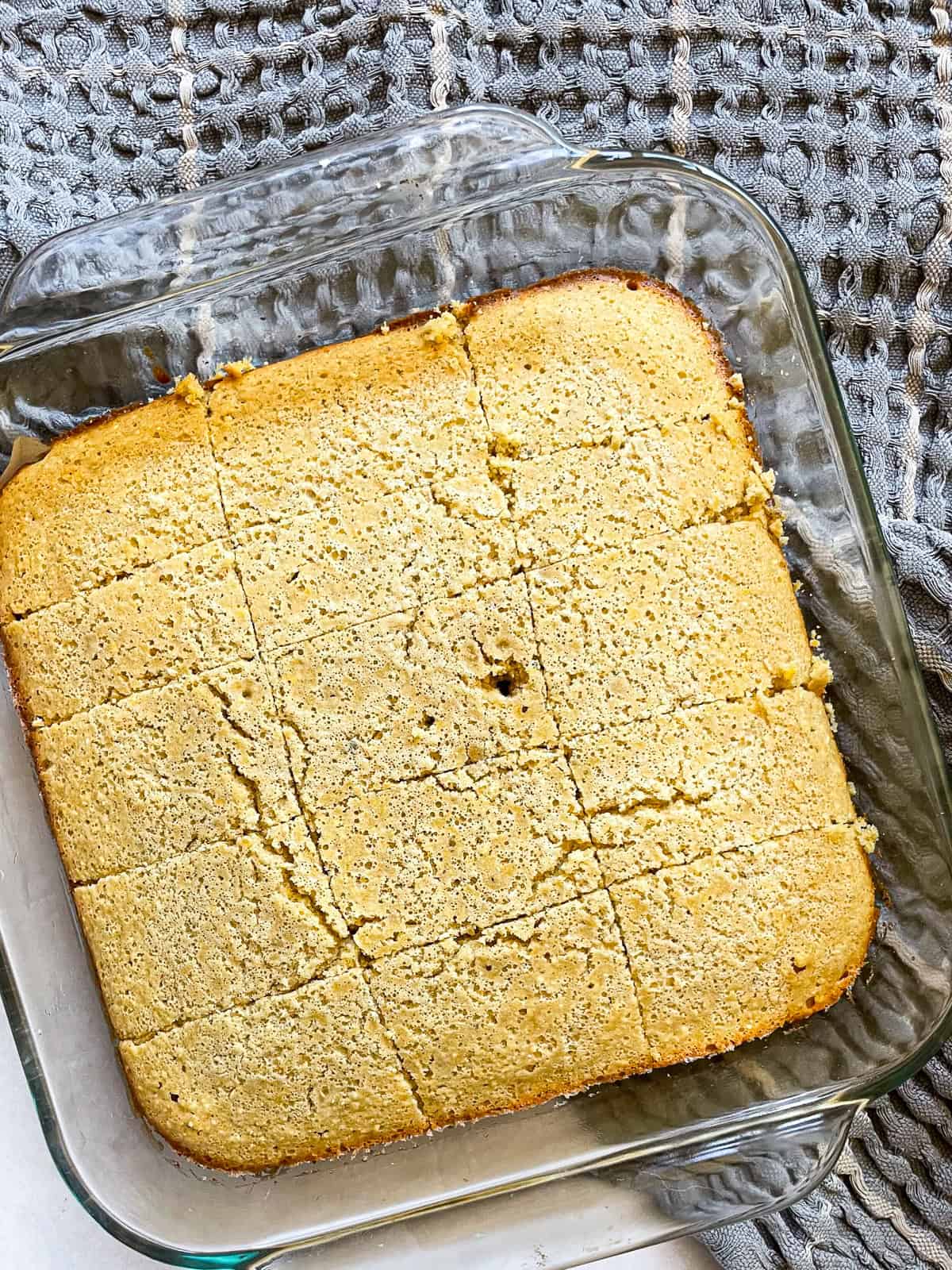
4. Bake: Add batter to a greased 8x8-inch baking pan, place in a 350°F oven, and bake for about 30 minutes.
What Type of Cornmeal?
My preferred choice for most baking recipes that call for cornmeal is finely ground cornmeal. It performs similarly to flour, and it works seamlessly alongside the almond flour in this recipe to create a light and fluffy pan of cornbread.
If you do prefer a bit more texture, you can choose a medium grind cornmeal, and I think it does work nicely in cornbreads. Don't use a coarse grind, like polenta, unless you like a more gritty final bake.
Tips & Substitution Suggestions for Almond Flour COrnbread
- Don't overmix. Cornbread's tenderness comes from folding together the ingredients rather than vigorously whisking or stirring.
- Bake it in a cast-iron pan. Try baking the batter in a cast-iron skillet - this will create a lovely little crust on the bottom.
- Can I make this cornbread ahead of time? Yes! Bake as directed, then place in an airtight container and store it at room temperature for up to 2 days, or wrap in plastic and freeze it for up to 2 months.
- What is the best buttermilk substitute? Here's an easy DIY buttermilk substitution: 1 tablespoon of vinegar mixed into 1 cup of milk. You can also do a mix of ½ cup plain yogurt and ½ cup of milk.
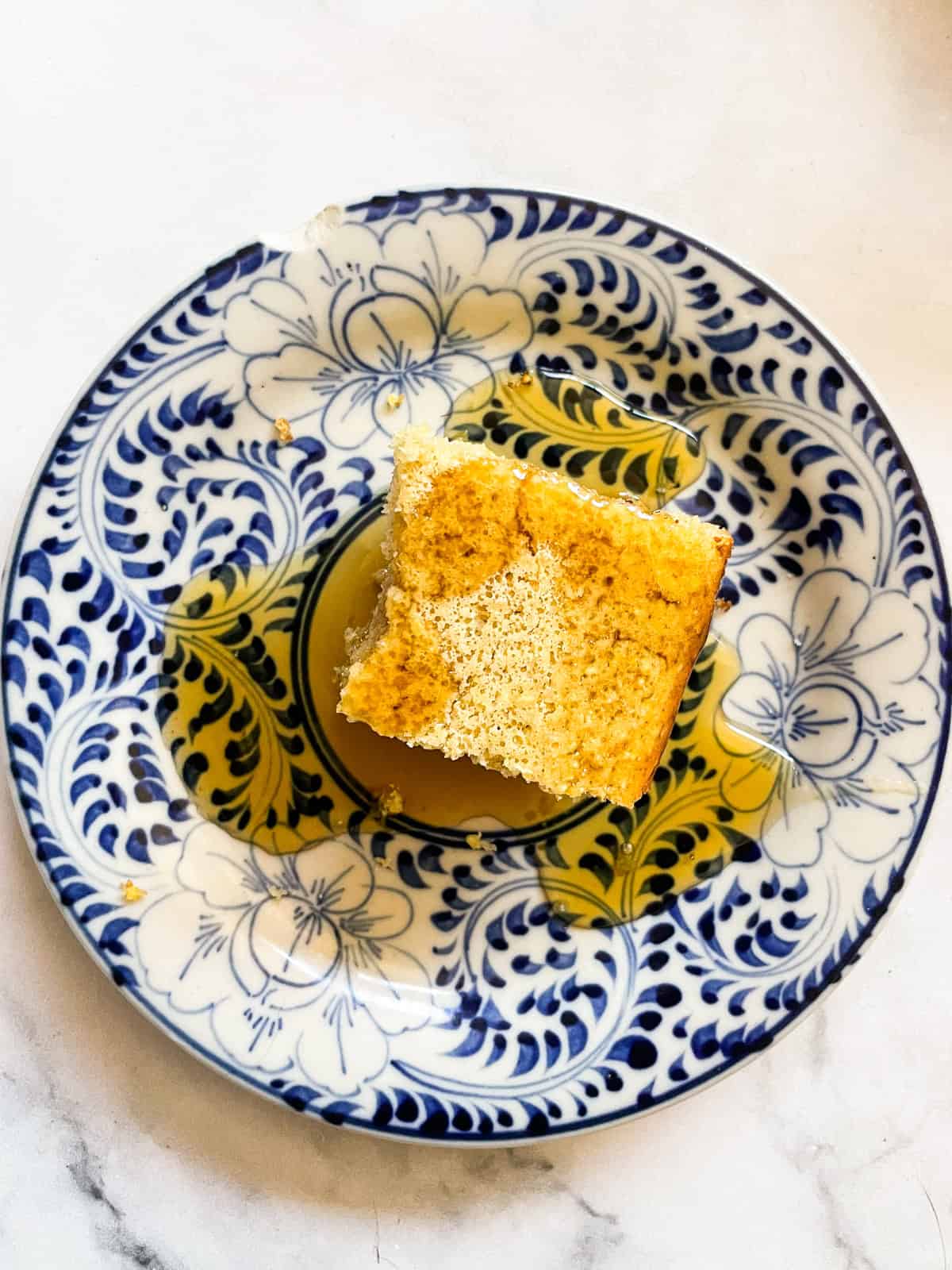
- Drizzle with maple syrup. I LOVE drizzling a little bit of maple syrup over my portion of warm cornbread - it just sings fall and warmth.
How to Store Almond Flour Cornbread
You can rewarm the cornbread in a low oven or toaster oven before serving. Here's how to store it:
- Counter - Transfer the cooled cornbread to an airtight container and store it on the counter for up to 2 days.
- Fridge - Place the container in the fridge and store it for up to 5 days.
- Freezer - Wrap the cooled cornbread in plastic or place it in a freezer-safe bag and store it in the freezer for up to 2 months. Thaw completely in the fridge before serving.
Happy baking! If you make this almond flour cornbread recipe, I'd love to know. Please leave a comment below, reach out with any questions, and tag me on Instagram @Cucina Nicolina ❤️

Almond Flour Cornbread
Ingredients
- 1 large egg
- 1 cup buttermilk
- ⅓ cup melted unsalted butter
- 1 cup cornmeal
- 1 cup almond flour (120 grams)
- ¼ cup granulated sugar
- 1 ½ teaspoon baking powder
- ½ teaspoon fine sea salt
Instructions
- Preheat oven to 350ºF. Line or grease an 8×8 pan with parchment and set aside.
- In a large bowl, whisk together the 1 large egg, 1 cup buttermilk, and ⅓ cup melted unsalted butter.
- In medium bowl whisk together the 1 cup cornmeal, 1 cup almond flour, ¼ cup granulated sugar, 1 ½ teaspoon baking powder, and ½ teaspoon fine sea salt.
- Fold the dry ingredients into the wet ingredients.
- Pour the batter into the prepared pan, place it in the oven, and bake for 25-30 minutes, until a tester comes out clean. Place the pan on a rack to cool, then cut into squares to serve.
Notes
- Don't overmix. Cornbread's tenderness comes from folding together the ingredients rather than vigorously whisking or stirring.
- Bake it in a cast-iron pan. Try baking the batter in a cast-iron skillet - this will create a lovely little crust on the bottom.
- Can I make this cornbread ahead of time? Yes! Bake as directed, then place in an airtight container and store it at room temperature for up to 2 days, or wrap in plastic and freeze it for up to 2 months.
- What is the best buttermilk substitute? Here's an easy DIY buttermilk substitution: 1 tablespoon of vinegar mixed into 1 cup of milk. You can also do a mix of ½ cup plain yogurt and ½ cup of milk.
- Drizzle with maple syrup. I LOVE drizzling a little bit of maple syrup over my portion of warm cornbread - it just sings fall and warmth.





Awesome!! Loved these. Used 50g coconut sugar instead. Avocado oil because I was too lazy to melt butter. My toddler loved it! Bookmarked to make again and again!
Yay! Glad you loved it!