
Whole grain flour adds nutrition and flavor to this flaky, all-butter whole wheat pie crust. Use it in your favorite sweet and savory pies, galettes, and more. Easy and delicious.
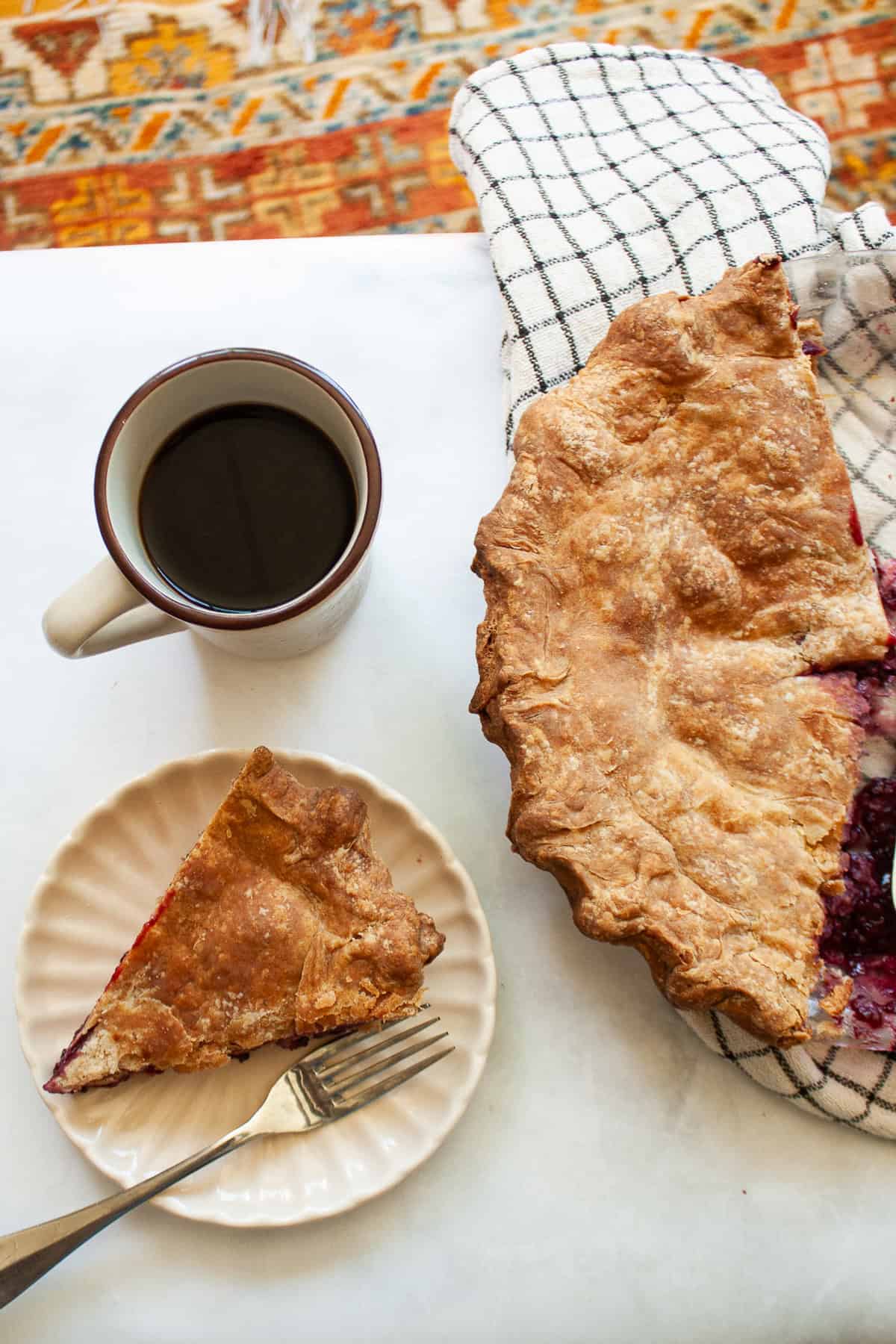
Change up your all-purpose pie crust and make this wholesome and utterly delicious all-butter whole wheat pie crust. The method to make it is not much different from a pie made with regular flour, yet you'll be rewarded with a depth of flavor, dose of whole grains, and unique presentation that will rival your ordinary pie dough.
I love this crust especially with homemade blackberry pie, but really, it works with any pie you love! Make a pumpkin pie with heavy cream at Thanksgiving and serve its rich custard filling on this flaky and buttery crust. It's also just right as the base for a Gravenstein apple pie.
If you find that using all whole wheat flour is too much for your taste, you can do an equal amount of all-purpose and whole wheat flour. This recipe makes enough for one double crust pie. You can halve the recipe for a galette dough or a single crust pie, or make it as written and stash the second dough disc in the freezer for up to 3 months.
I love whole wheat pie crust as an alternative to my oat flour pie crust and gluten free all butter pie dough recipes when I don't need to bake gluten-free.
Jump to:
This Is a Great Way to Get More Whole Grains!
I love baking with whole grain flour whenever I can, be it wheat flour or naturally gluten-free flours like oat or brown rice flours. Not only do they add nutrition to my bakes, they add their own flavor profile. I also love the texture and taste of whole wheat and whole grain flour! So why use it?
- It's an easy way to get more whole grains. We know that whole grains give us extra vitamins, minerals, and protein. Using whole wheat flour - like in my whole wheat rhubarb scones, whole wheat waffles, or whole wheat chocolate chip cookies recipes - adds wonderful whole grains in a tasty preparation.
- I love its texture. A bit sturdier and denser than all-purpose flour, whole wheat flour lends a bit of chew plus a tiny bit of natural sweetness.
- You can use any variety. There are so many types of whole wheat flour, including what's labeled as whole wheat flour as well as white whole wheat flour (looks more like all-purpose flour but retains the whole grains), whole wheat pastry flour (more finely ground), and spelt flour (another whole grain wheat flour that I love).
Why Whole Wheat Flour?
For one thing, it tastes so good, with a subtle, nutty richness and texture you just don't get from all-purpose flour. And for another, it is packed with whole grains which means you get more fiber and protein in every bite.
This crust is sturdy enough to hold up to a bit of handling but isn't gritty or dry. Whole wheat flour's slight nuttiness complements both sweet and savory bakes, like in a (gluten-free) quiche (swap the whole wheat crust for the gluten-free crust), making it an easy choice for anything you want to make.
Ingredient Notes
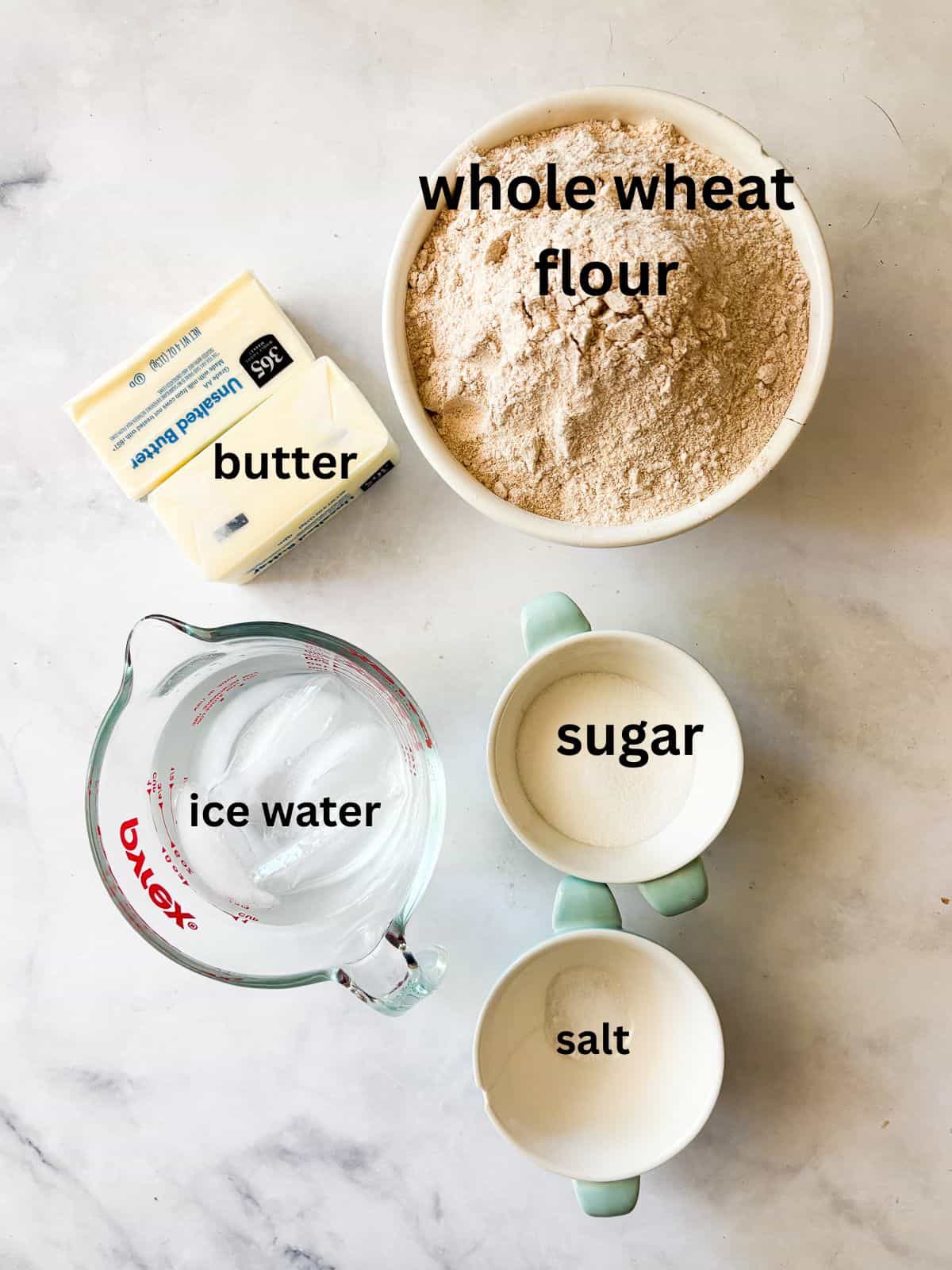
Minimal ingredients and whole wheat flour are all you need to make this pie crust. I've outlined what you need below, with the full ingredient amounts and detailed instructions included in the recipe card lower down.
- Whole wheat flour - This can be any whole wheat flour of your choice, and can include whole wheat flour, whole wheat pastry flour, spelt flour, or white whole wheat flour.
- Granulated sugar - When I make a pie crust for a sweet pastry, such as pie, I add a little sugar. You can increase the amount of sugar from 1 tablespoon to 2 tablespoons if you wish, or use maple syrup instead. For a crust that you plan to use to make savory dishes, you can reduce or leave out the sugar.
- Salt - A little fine sea salt or table salt balances the sweetness of the pastry.
- Butter - Always use unsalted butter in pastry so that the dough doesn't turn out overly salty.
- Ice water - A few tablespoons of ice water help to bring the dough together. Make up the ice water before you start putting together the dough so it's nice and cold when it's time to add it in.
Step-by-step Instructions
Tip: keep your butter cold in the fridge (or even the freezer if you can plan ahead!). Cold butter and ice water help to make the crust super flaky and tender. Add the water in slowly and a little bit at a time so that you can hit that sweet spot between just enough water (versus the dough being too dry or too wet). Here's a quick look at how to make this crust:
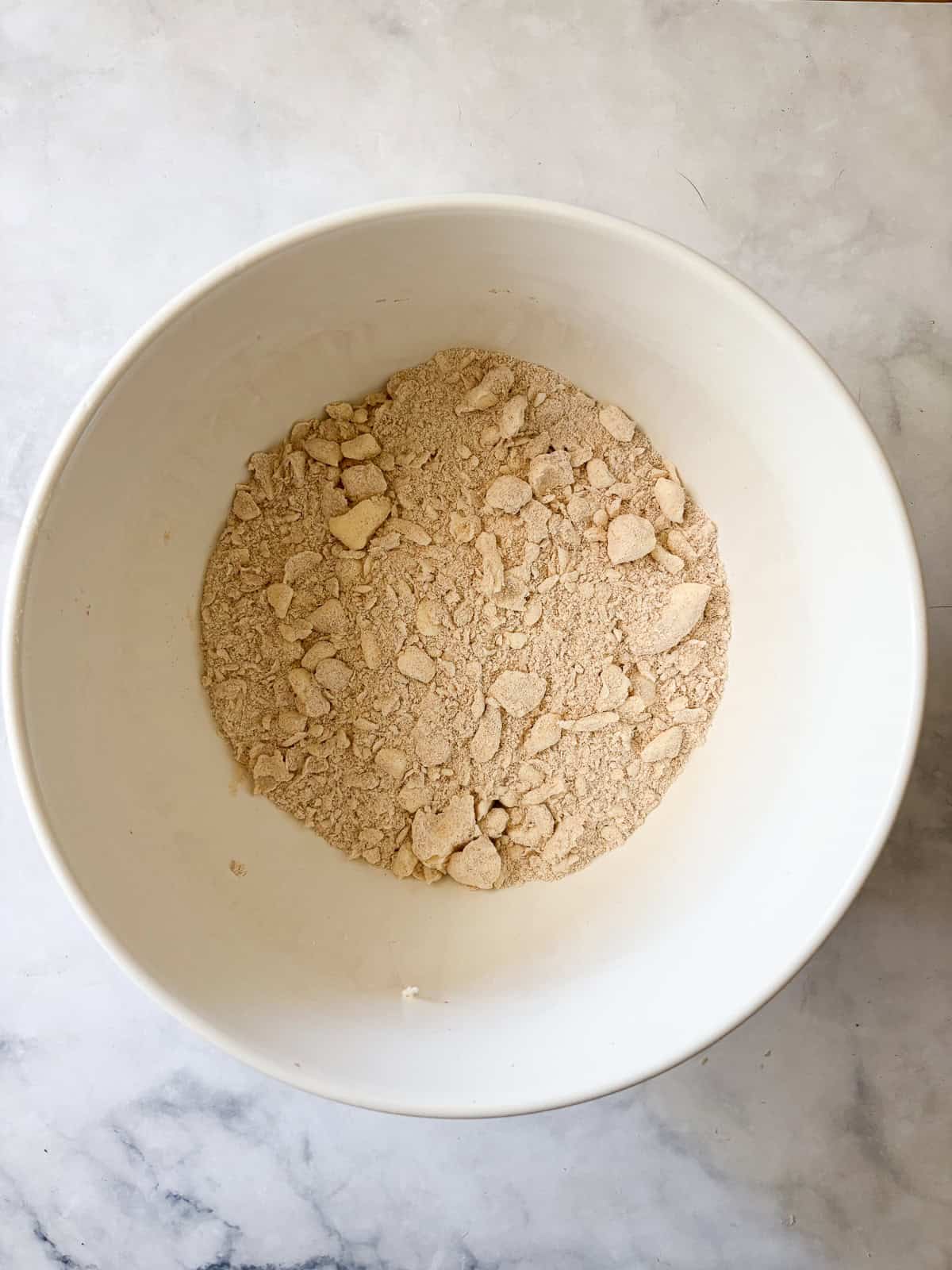
1. Make dough: Mix the whole wheat flour, sugar, and salt in a bowl, then work in the butter.
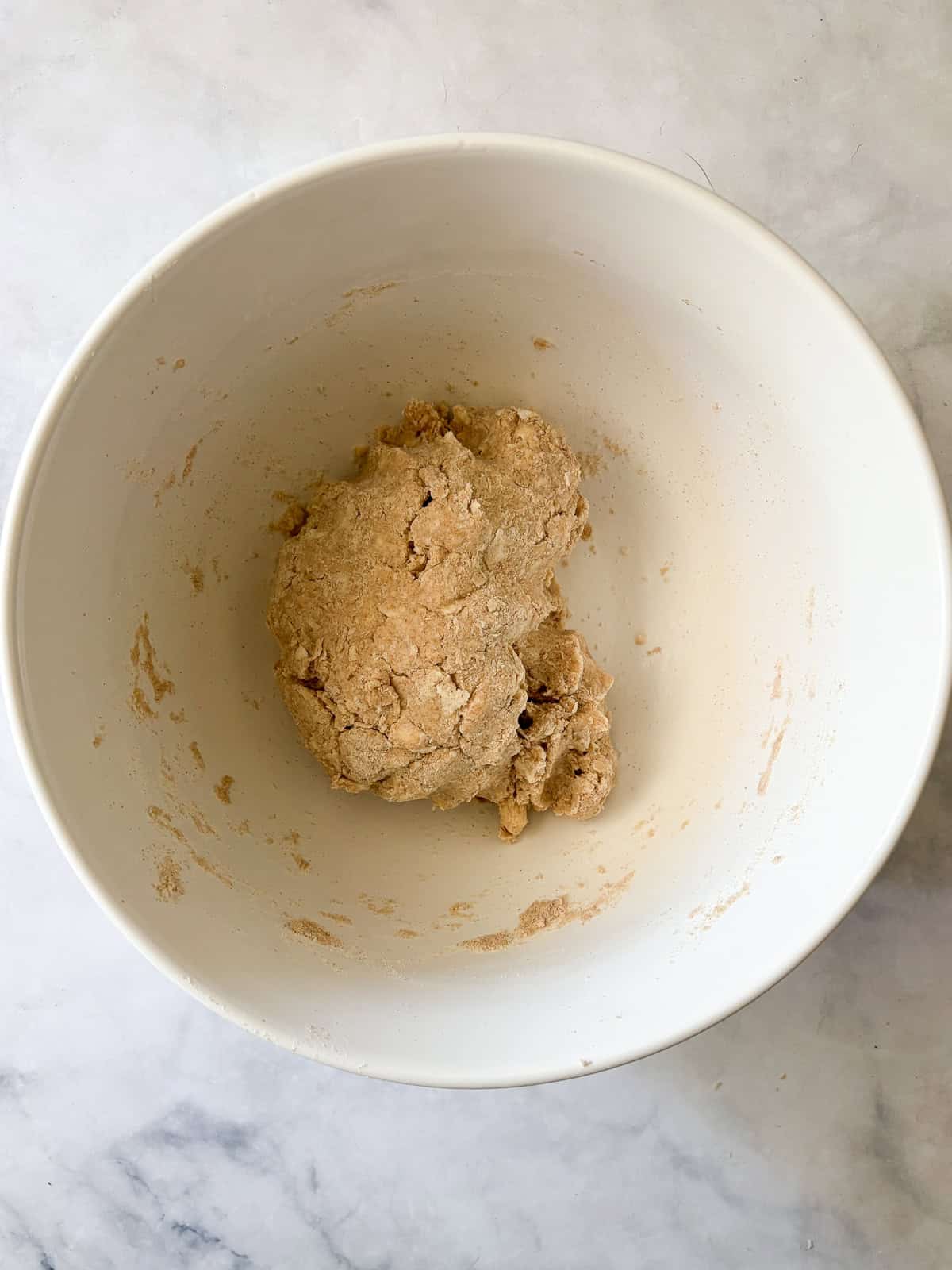
2. Add water: Stir in the ice water 2 tablespoon at a time. Form into a ball.
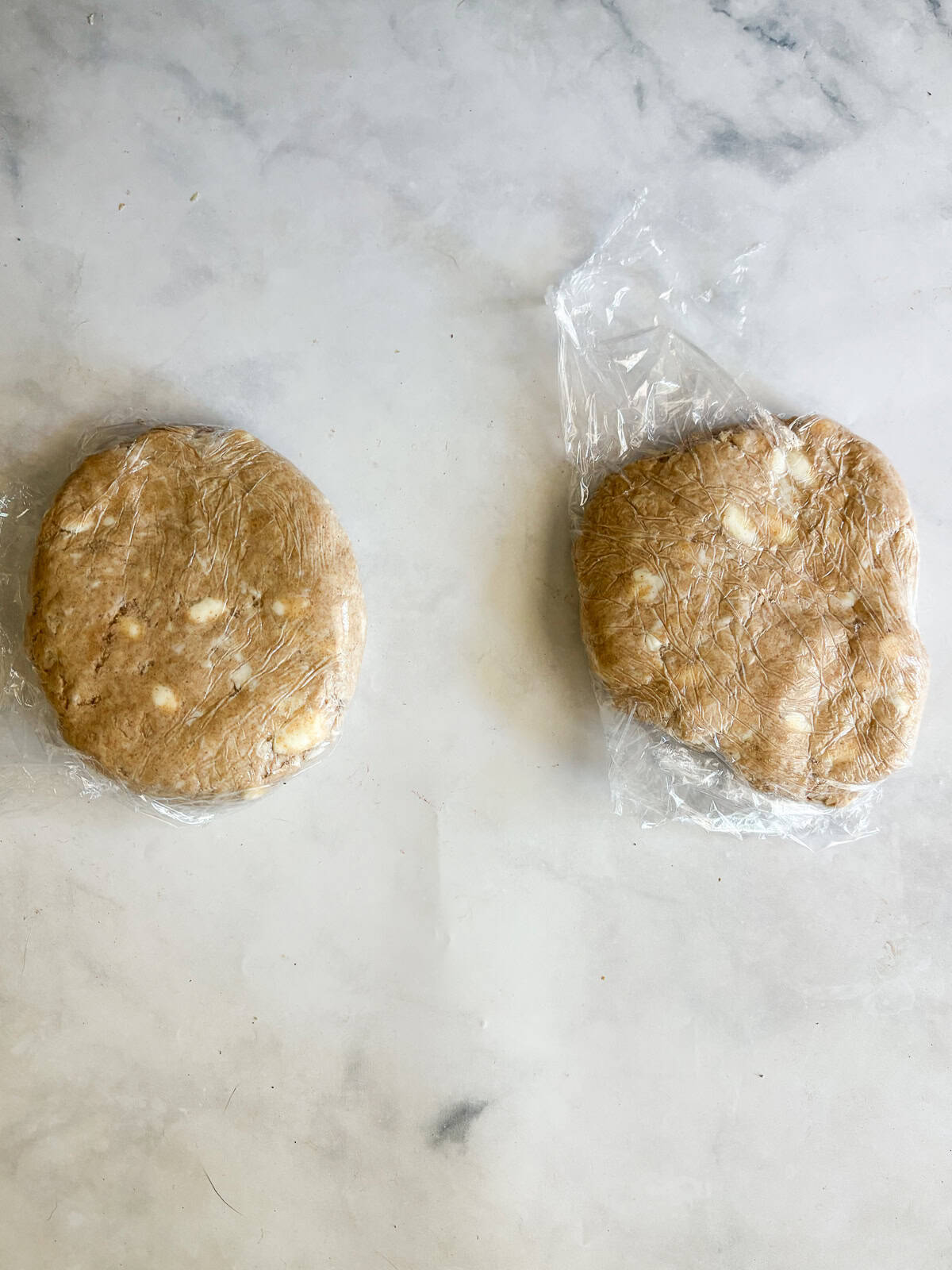
3. Chill dough: Divide the dough in half, wrap in plastic, then chill for at least 30 minutes.
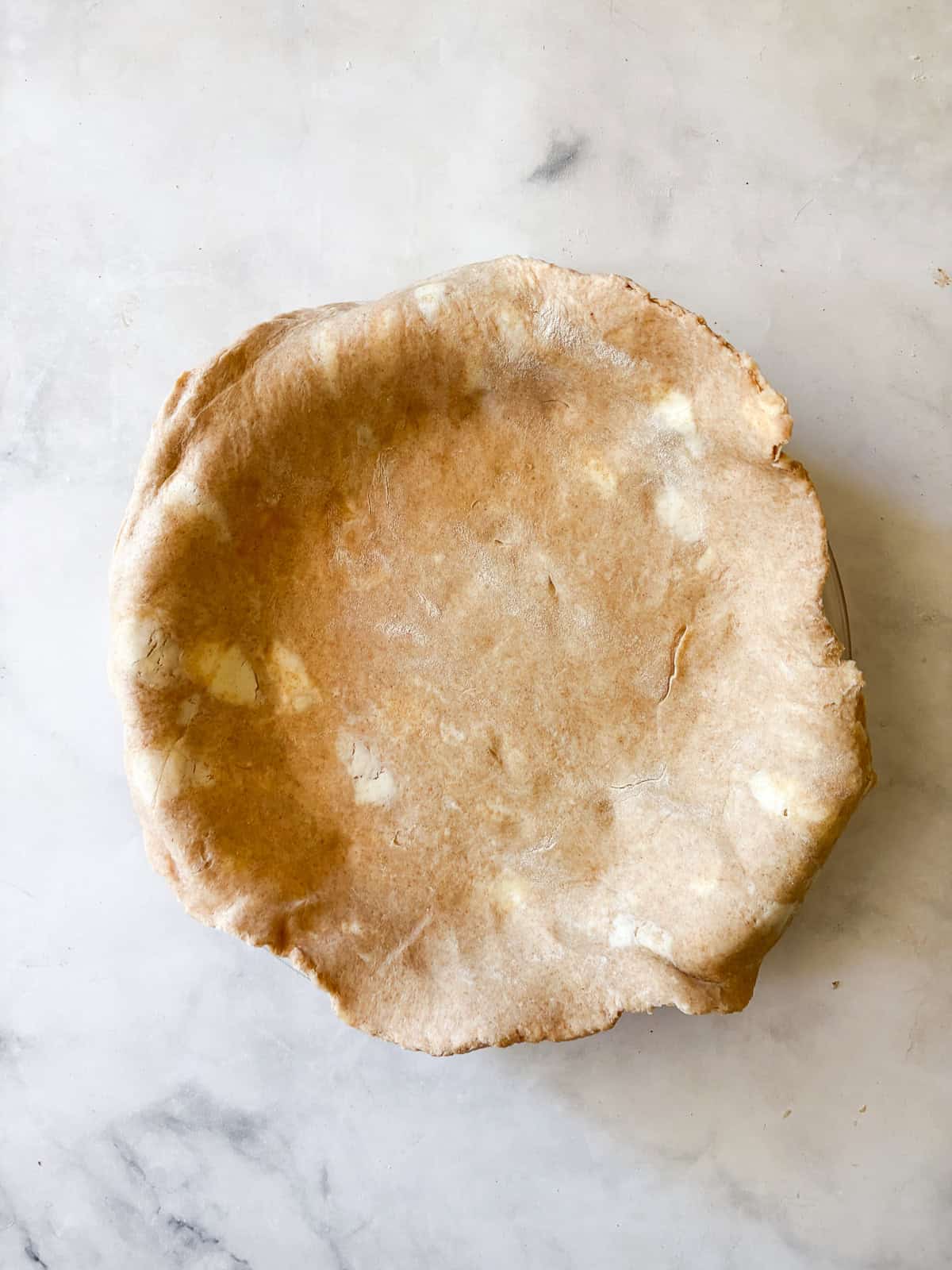
4. Use! Roll out the dough and use it for your favorite pie.
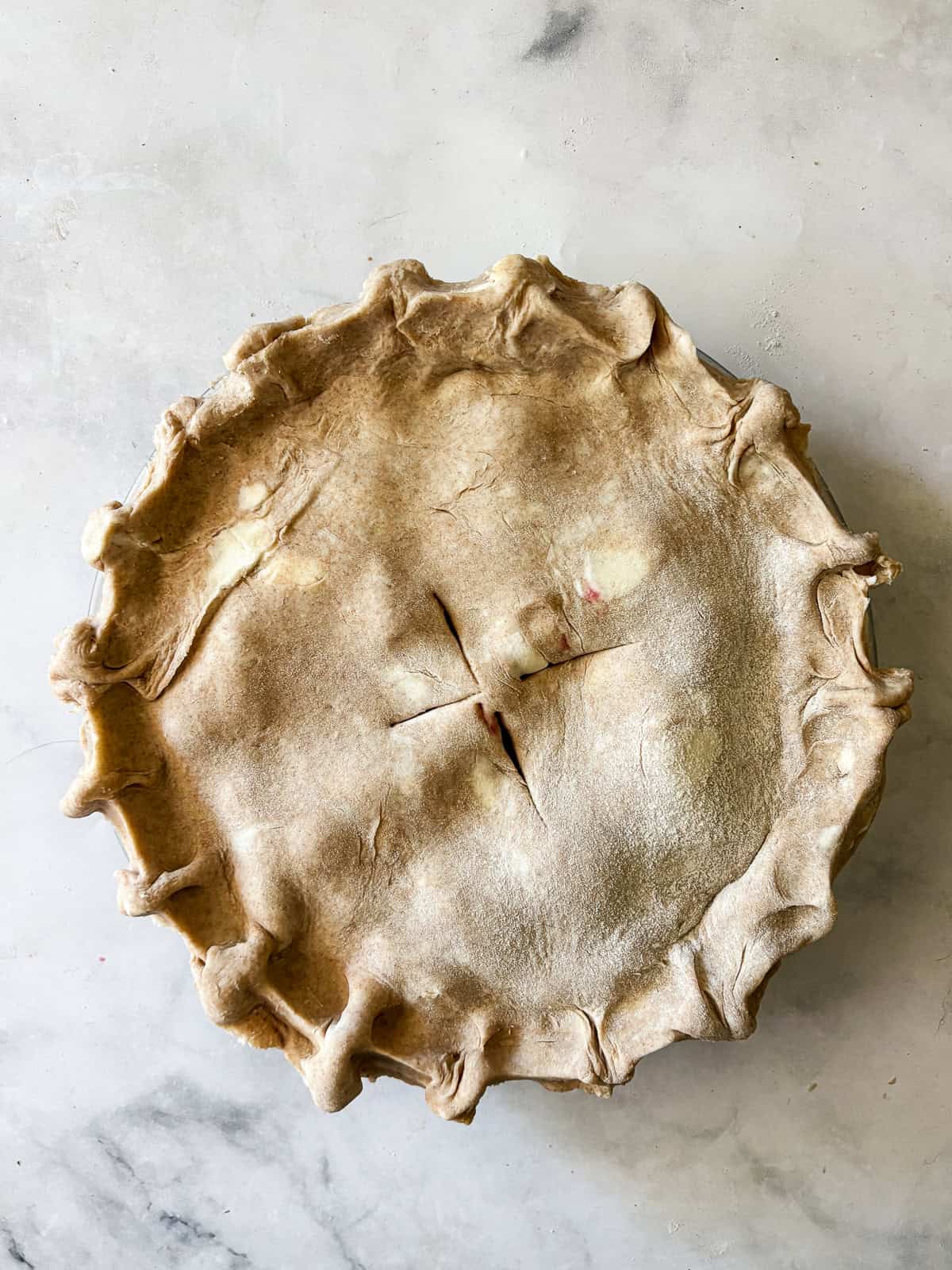
Tips & recipe Notes
- Keep the butter cold. Something that really helps create an ultra-flaky pie dough is to keep the butter very cold. This will create streaks and clumps of butter in the dough - and that's a good thing! When you bake the crust, the butter will melt in the oven, creating gaps in the dough. Steam also releases during the baking process, making those lovely flaky layers. Keep the butter in the fridge until just before using, or even keep it in the freezer so it's ultra cold.
- Add ice water slowly. You want just enough cold water to bring the dough together, but you don't want to make it too wet and goopy. You'll get the hang of this the more you make pie dough, but a good rule to follow is to continue to slowly add water 1 tablespoon at a time until you don't see any dry bits of flour. The dough should hold together when you squeeze it into a ball.
- Hydrate the dough. Whole wheat flour, like gluten-free flour, benefits from a period of rest to help it hydrate. Leave at least 30 minutes for the dough to chill in the fridge, and preferably even more if you can. You can keep the dough in the fridge for up to 3 days, or freeze it for longer. The colder the dough, the easier it will be to roll out. However, you may need to let the dough rest on the counter for a few minutes if it's very chilled.
- Make it vegan. You can easily make this recipe vegan by using your favorite non-dairy butter for the butter. Or, try cold coconut oil or olive oil.
- Follow your own recipe. You may or may not need to blind-bake (cook the pie briefly at a higher temperature) depending on the recipe you're using. For fruit pies, such as apple pie, you won't need to blind-bake. But for a custard-based pie, such as pumpkin pie, you may want to blind-bake before adding the filling. It really just depends on your recipe.
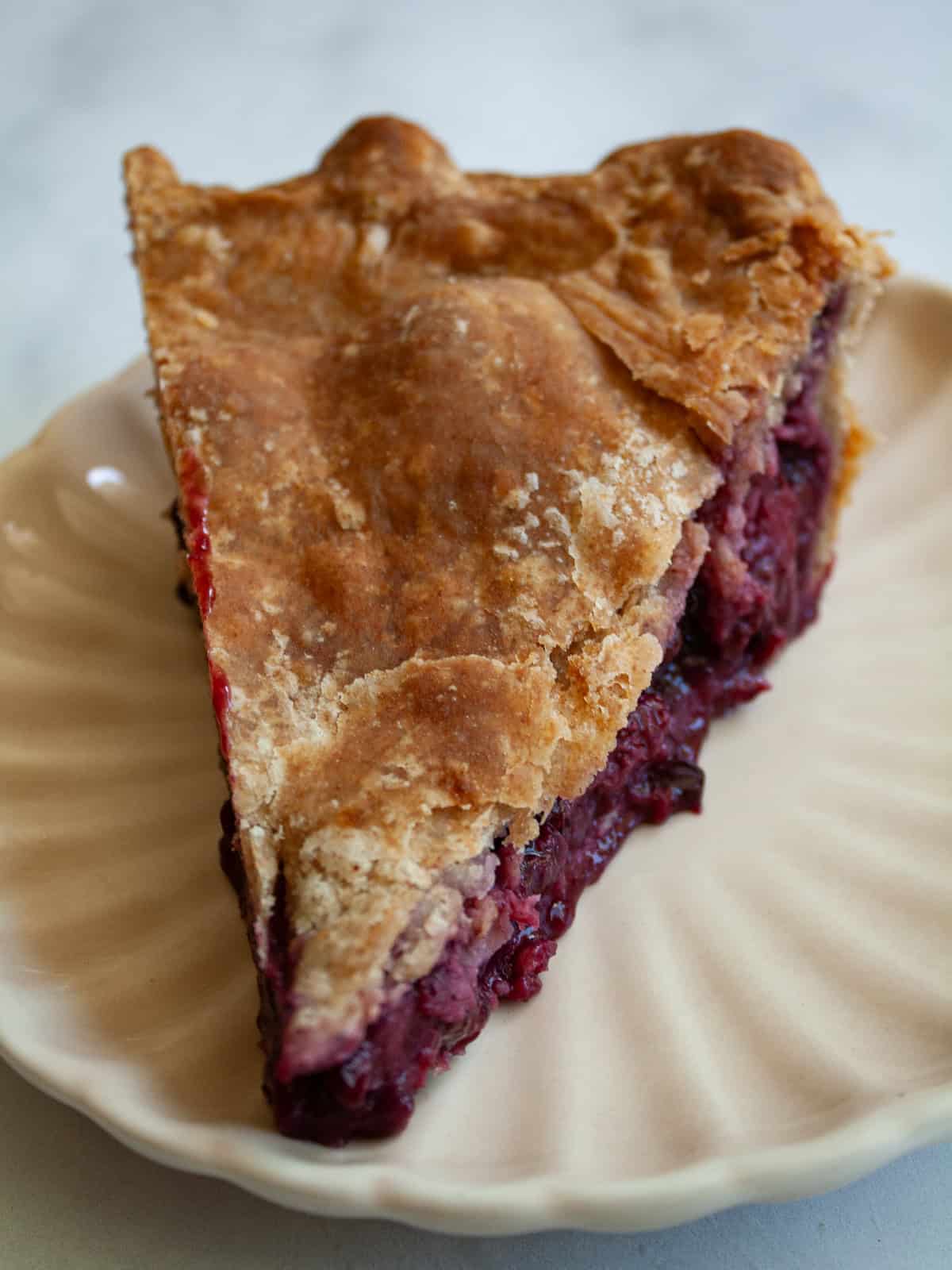
Recipes where this Pie Crust Will Shine
You can use oat flour pie crust in any pie, tart, galette, or quiche recipe! Use it in the recipes listed below instead of the gluten-free pie dough included:
- Pumpkin pie - A maple pumpkin pie is so nice with this crust.
- Apple pie - I love using a sturdy whole grain pie crust in my Gravenstein apple pie recipe.
- Quiche - Swap a whole wheat pie crust in my recipes for gluten free quiche or gluten free asparagus quiche.
- Galette - Try this recipe in my rhubarb galette
- Berry pie - Use this recipe to make strawberry rhubarb honey pie, blackberry pie, or as the base for any pie you fancy!
Proper Storage
Use your pie crust soon after you make it, or keep it for another time. Here's how to properly store a pie crust made with whole wheat flour:
- Fridge - Keep the dough, well-wrapped in plastic or in a sealable plastic bag, in the fridge for up to three days.
- Freezer - Wrap the dough well in plastic and store the discs in the freezer for up to three months. Thaw the dough in the fridge before using it.
More easy Pie Recipes
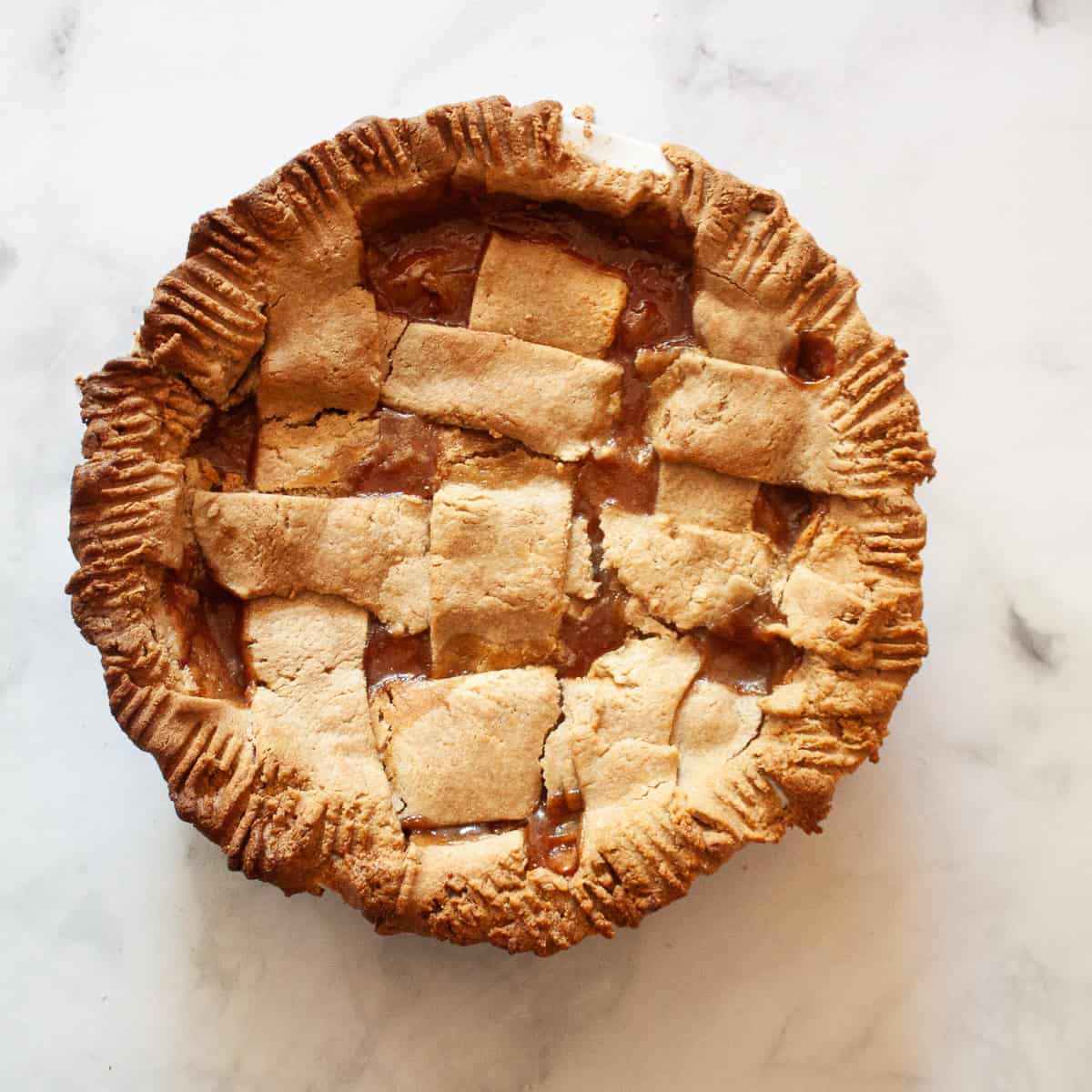

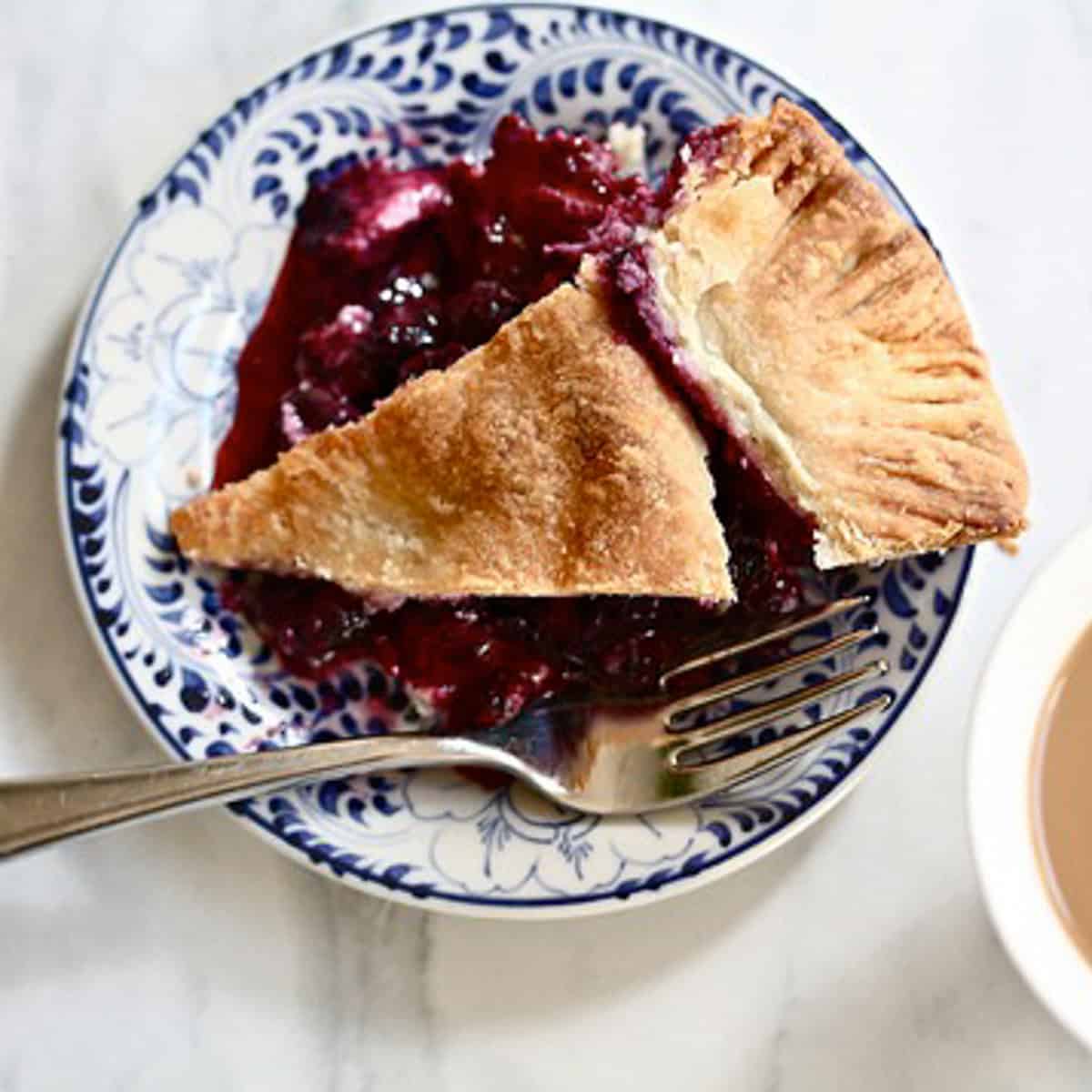
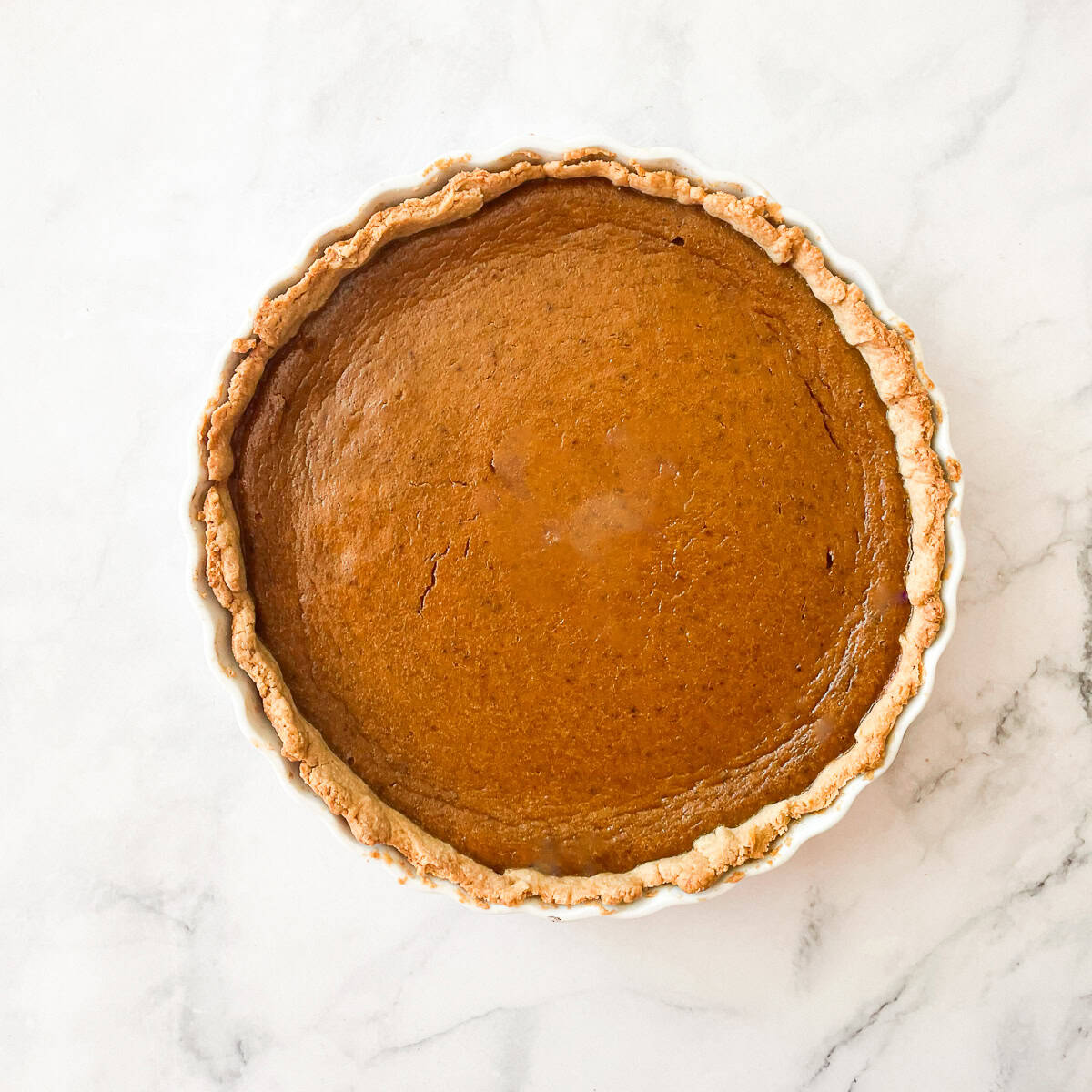
If you tried this whole wheat pie crust recipe, please let me know! Or if you have any recipe questions, always feel free to reach out in comments or email. I hope you love it! ❤️
Recipe
Whole Wheat Pie Crust
Ingredients
- 2 ½ cups whole wheat flour , like whole wheat flour, whole wheat pastry flour, or spelt flour
- 1 teaspoon granulated sugar
- ½ teaspoon fine sea salt
- ¾ cup unsalted butter, , very cold and cut into cubes
- 6-7 tablespoons ice water
Instructions
- In a large bowl, whisk the 2 ½ cups whole wheat flour, 1 teaspoon granulated sugar, and ½ teaspoon fine sea salt. Cut in the ¾ cup unsalted butter, until the mixture resembles coarse crumbs. Add the 6-7 tablespoons ice water 1 tablespoon at a time, and mix it in with a fork until the pastry holds together lightly when pressed into a ball.
- Divide into two balls, wrap them in plastic, flatten them into discs, and let chill in the fridge for at least 30 minutes.
- When ready to roll out the dough, remove it from the fridge and lightly dust a clean surface with oat flour. Roll out the dough and use it in your recipe.
Notes
- Keep the butter cold. Something that really helps create an ultra-flaky pie dough is to keep the butter very cold. This will create streaks and clumps of butter in the dough - and that's a good thing! When you bake the crust, the butter will melt in the oven, creating gaps in the dough. Steam also releases during the baking process, making those lovely flaky layers. Keep the butter in the fridge until just before using, or even keep it in the freezer so it's ultra cold.
- Add ice water slowly. You want just enough cold water to bring the dough together, but you don't want to make it too wet and goopy. You'll get the hang of this the more you make pie dough, but a good rule to follow is to continue to slowly add water 1 tablespoon at a time until you don't see any dry bits of flour. The dough should hold together when you squeeze it into a ball.
- Hydrate the dough. Whole wheat flour, like gluten-free flour, benefits from a period of rest to help it hydrate. Leave at least 30 minutes for the dough to chill in the fridge, and preferably even more if you can. You can keep the dough in the fridge for up to 3 days, or freeze it for longer. The colder the dough, the easier it will be to roll out. However, you may need to let the dough rest on the counter for a few minutes if it's very chilled.
- Make it vegan. You can easily make this recipe vegan by using your favorite non-dairy butter for the butter. Or, try cold coconut oil or olive oil.
- Follow your own recipe. You may or may not need to blind-bake (cook the pie briefly at a higher temperature) depending on the recipe you're using. For fruit pies, such as apple pie, you won't need to blind-bake. But for a custard-based pie, such as pumpkin pie, you may want to blind-bake before adding the filling. It really just depends on your recipe.
Nutrition
Love this recipe?
Add Cucina Nicolina as a trusted source on Google so my newest bakes, cakes, and simple gluten-free recipes appear more often when you search.
Add Cucina Nicolina on Google(Works best when you're logged into Google, especially on mobile.)
I'd love to hear from you! Please leave me a note.