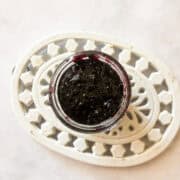
Blackberry Jam Recipe (No Pectin)
Three-ingredient blackberry jam is made without pectin and is great for canning or just to eat now!
Servings: 4 cups
Calories: 463kcal
Ingredients
- 5 cups blackberries (about 24 ounces)
- 2 cups granulated sugar, add more if your berries are very tart
- 1 tablespoon lemon juice
Instructions
- Place a small plate in the freezer. In a large, heavy-bottomed pot, combine 5 cups blackberries, 2 cups granulated sugar, and 1 tablespoon lemon juice. Using a wooden spoon, mash and crush the berries a bit if you like, then cook on high heat for 5 minutes. Reduce to low, skim off any foam that comes to the top, and continue simmering until the mixture thickens, at least 20 minutes and longer if needed.
- Check for doneness by using a thermometer; the temperature should read 220°F. Or, remove the plate from the freezer, place a spoonful of jam on the plate, and drag the spoon through it. If the jam wrinkles, it's done. If it's still loose, keep cooking a bit longer.
- Remove from heat and pour into sterile glass jars or containers. Jam will thicken as it cools. If canning, proceed with your preserving method, or let the jam cool on the counter and then store in the refrigerator.
Notes
CN's Jam Tips
- Add more sugar. I prefer not to oversweeten my jams (see my low sugar strawberry jam for tips) so that I can really taste that luscious fruit flavor. If you like a bit of a sweeter jam, add 1 more cup of sugar.
- Use ripe blackberries - always! This will help the jam to turn out nice and sweet without a ton of added sugar. Blackberries are ready and ripe when they are deeply purple black, soft, and can be plucked easily from the bushes.
- Try a thermometer. To ensure the jam reaches its proper setting point, insert an instant-read thermometer. When it reads 220°F, the jam has reached the setting point.
- Use a large pot. Make sure there is plenty of room in the pot for the jam to reach the rolling boil; at this point, I like to skim off the foam.
- Skimming the foam. About that - skimming off any foam that rises to the surface during the boil (use a slotted spoon) will create a clearer jam.
- Stir often. Don't let that jam burn! Not only will it ruin your pot, but you'll be so sad to have wasted all the gorgeous fruit. Stirring frequently ensures that the jam doesn't stick and burn on the bottom of the pot.
- Try frozen fruit. Confession: Some years, I just don't have time to make jam as soon as the berries are ripe. We stash them in the freezer, and then I cook them directly from frozen when I have a free afternoon.
- The plate test. Place a plate in the freezer to chill while the jam cooks. When the jam coats the back of a wooden spoon, drizzle a little jam on the cold plate. Drag a spoon through it; if the jam "wrinkles" and doesn't run, it's set and ready to take off the heat. If it's still liquidy, keep cooking it and try again in a few minutes.
Nutrition
Calories: 463kcal | Carbohydrates: 117g | Protein: 3g | Fat: 1g | Saturated Fat: 0.03g | Polyunsaturated Fat: 1g | Monounsaturated Fat: 0.1g | Sodium: 3mg | Potassium: 297mg | Fiber: 10g | Sugar: 109g | Vitamin A: 385IU | Vitamin C: 39mg | Calcium: 53mg | Iron: 1mg