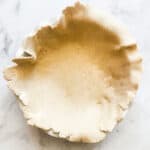
Oat Flour Pie Crust
This beautifully flaky and tender gluten free oat flour pie crust is incredibly versatile and works in sweet and savory pastries!
Servings: 2 9-inch pie crusts
Calories: 1361kcal
Ingredients
- 3 cups oat flour (350 grams)
- 1 tablespoon granulated sugar, for sweet pastry dough
- ½ teaspoon fine sea salt
- ¾ cup unsalted butter, very cold
- 6-7 tablespoons ice water
Instructions
- Mix the oat flour with the sugar and salt in a large bowl. Cut in the butter until the mixture resembles coarse crumbs. Add the ice water 1 tablespoon at a time and mix it in with a fork until the pastry holds together lightly when pressed into a ball.
- Divide into two balls, wrap them in plastic, flatten them into discs, and let chill in the fridge for at least 30 minutes.
- When ready to roll out the dough, remove it from the fridge and lightly dust a clean surface with oat flour. Roll out the dough and use it in your recipe.
Notes
- Keep the butter cold. One secret to ultra-flaky pastry dough is to keep the butter cold. This will create streaks and clumps of butter in the dough - and that's a good thing! When you bake the crust, the butter will melt in the oven, creating gaps in the dough. Steam also releases during the baking process, making those lovely flaky layers.
- Add the ice water slowly. You want just enough ice water to bring the dough together but you don't want to over-hydrate the dough (even though it's a gluten free dough). You'll get the hang of this the more you make pie dough, but a good rule to follow is to continue to slowly add water 1 tablespoon at a time until you don't see any dry bits of flour without the flour becoming saturated. The dough will hold together when you squeeze it together in a ball, and won't have any bits falling off on the sides.
- Rest the dough. As with all gluten free baking recipes, you should rest your pie dough in the fridge. (This applies to regular pie dough as well!) Leave at least 30 minutes for the dough to chill in the fridge, and preferably even more (hours, or even a few days). The colder the dough, the easier it will be to roll it out and the dough won't be sticky.
- Use oat flour on the counter. When you are ready to roll out your dough, sprinkle the counter liberally with oat flour. You can also roll the dough out between two pieces of plastic wrap or parchment paper sprinkled with oat flour.
- Don't roll it out too thin. This is a sturdy dough, but take care not to roll it out overly thin, or it may break when you place it in the pie pan.
- Do a vegan version. You can easily make this recipe vegan by using your favorite non-dairy butter for the butter. Or, try coconut oil or olive oil. If you use an oil, place it in the fridge to chill before adding it to the dough.
- Follow your recipe. You may or not wish to blind-bake (cook the pie briefly at a higher temperature) depending on your recipe. For fruit pies, such as apple pie, you won't need to blind-bake. But for a custard-based pie, such as pumpkin pie, you may want to blind-bake before adding the filling.
Nutrition
Calories: 1361kcal | Carbohydrates: 124g | Protein: 27g | Fat: 85g | Saturated Fat: 47g | Polyunsaturated Fat: 9g | Monounsaturated Fat: 23g | Trans Fat: 3g | Cholesterol: 183mg | Sodium: 627mg | Potassium: 688mg | Fiber: 12g | Sugar: 7g | Vitamin A: 2127IU | Calcium: 121mg | Iron: 7mg